
I. Welcome to the World of Pet Food Secrets
When a pet guardian opens a bag of dog or cat food, they are holding a bag of super fuel. Just like humans need good food to grow and play, pets need the right mix of ingredients to power their bodies. Choosing the right food is one of the most important jobs a pet owner has, because good nutrition supports every part of a pet’s life, from running faster to staying healthy inside.
This specialized food helps keep a pet’s coat shiny and soft, and it supports a strong inner defense system, known as the immune system. To understand pet food, it helps to know about the three main building blocks of food, which experts call macronutrients.
The Big 3: Understanding Protein, Fat, and Carbs
- Protein: The Building Blocks. Protein is essential because it provides amino acids, which are like tiny construction pieces. These pieces help build and repair muscles, grow strong nails, and keep hair and ligaments healthy. Protein is a fundamental requirement for pets of all ages, helping to support muscle development, repair, and maintaining optimal bodily functions.
- Fat: The Energy Supercharger. Fat provides the most powerful energy source for pets. Experts note that pets get 2.5 times more calories (energy) per gram from fat than they do from protein or carbohydrates. Fat is also vital because it helps the body absorb important vitamins, known as fat-soluble vitamins (like Vitamins A, D, E, and K).
- Carbohydrates (Carbs): The Quick Fuel. Carbohydrates are easily digested and serve as a quick source of energy. The body breaks down carbs into glucose, which is the single most important energy source used by all the cells in the pet’s body.
II. The Truth About Carbs: Are Grains Good or Bad?

For many years, some people thought that ingredients like corn or wheat were just cheap “fillers” added to pet food. However, expert research confirms that this is a misconception. Grains are, in fact, highly nutritious ingredients that are crucial for providing fast energy and delivering essential vitamins.
Grains Give You Go!
Grains, which include wheat, corn, rice, oats, and barley, are primarily used in pet food because they are a highly digestible source of carbohydrates. They are not just added for bulk; they contribute valuable nutrients, including protein, fiber, B vitamins, minerals, and essential fatty acids.
When a dog or cat eats grains, those carbohydrates turn quickly into glucose, which acts as the power source for all bodily functions. This energy is necessary for their daily activity, supporting healthy immune systems, and overall well-being.
Corn and Wheat: Hidden Heroes
Specific grains like corn are often misunderstood. Corn is a natural and wholesome ingredient that provides essential fatty acids, protein, and carbohydrates. It is an excellent source of linoleic acid (an omega-6 fatty acid), which is required for maintaining a healthy, vibrant skin and coat. Grains also contain natural protectors called antioxidants, such as Vitamin E and beta-carotene, which help keep the body safe from damage.
Grain Myths Debunked: Allergies Are Rare
One of the biggest concerns pet owners have about grains is the possibility of allergies. However, food allergy tests show that allergies to grains or to gluten (the protein found in wheat, barley, and rye) are extremely rare in dogs and have never been documented in cats.
If a pet does have a food allergy, experts report that they are much more likely to be sensitive to common proteins, such as beef, dairy, or chicken, than to a grain like corn or wheat.
Grain-Free vs. Grain-Inclusive: Focus on Balance
Both grain-inclusive foods (those containing corn, wheat, etc.) and grain-free foods (which use other carbs like potatoes or legumes) have a place in pet nutrition. As long as the food is described as high-quality and nutritionally complete and balanced, either choice can be excellent.
When experts compare these diets, they recognize that both systems provide necessary energy and nutrients. However, different carbohydrate sources offer unique nutritional benefits. For instance, grains provide specific fatty acids and B vitamins, while legumes offer different combinations of carbohydrates and proteins. Therefore, pets benefit from exposure to a broader spectrum of nutrients than just sticking to one type of food. To ensure optimal health and ward off sensitivities, some specialists suggest adopting a rotational feeding plan, switching between grain-free and grain-inclusive formulas to supply the fullest range of nutrient sources.
III. The Gut Cleaners: Why Fiber Is a Superhero
Dietary fiber is a key nutrient that plays a crucial role in a pet’s well-being. Even though regulatory bodies like AAFCO (the Association of American Feed Control Officials) do not set official minimum requirements for fiber, it has been gaining consideration thanks to scientific advancements regarding the gut microbiota. Modern scientific understanding of pet health now recognizes fiber as essential for the inner workings of the body.
Fiber’s Two Most Important Jobs
Fiber’s most significant role is supporting the billions of good bacteria that live in the pet’s intestines, known as the gut microbiota. A large portion of a dog’s immune system resides in the gut, so by keeping the gut balanced and diverse, fiber directly helps keep the whole dog healthy.
Fiber is also crucial for weight management. It promotes a feeling of satiety (fullness) by adding bulk and trapping water in the stomach. This feeling of satisfaction is extremely helpful for obese patients who need to achieve weight loss, as they feel full without consuming too many calories. Furthermore, when food contains a high level of fiber, it tends to reduce the overall digestibility of other nutrients. This means that the pet’s body physically absorbs less overall energy (calories) from the meal. This combination of increased satiety and reduced calorie absorption makes fiber highly effective for slimming down pets while protecting their well-being.
Understanding Fiber Types
Not all fiber is the same, and different types perform different functions:
- Insoluble Fiber: This fiber does not dissolve in water. It acts like a scrub brush, adding bulk to the stool and ensuring everything moves smoothly and regularly through the digestive tract. It is excellent for promoting regularity and reducing constipation.
- Soluble Fiber: This type dissolves in water, often forms gels, and is typically fermentable. The good gut bacteria can consume it, meaning soluble fiber acts as a prebiotic and helps support the healthy growth of gut bacteria, while also enhancing satiety.
Ingredient Spotlight: Why Beet Pulp is a Digestive Helper
One common and beneficial source of fiber found in high-quality pet food is beet pulp. Beet pulp is the material remaining after the sugar has been taken out of sugar beets.
A critical fact to remember is that because the sugar is extracted, beet pulp contains no sugar. It is an important source of fiber that maintains intestinal health and enhances a pet’s ability to absorb nutrients from the rest of the food. Beet pulp is categorized as a moderately fermentable fiber, meaning it provides the best of both worlds: it offers bulk for regular digestion and it ferments in the intestine to supply energy (short-chain fatty acids) for the cells lining the digestive tract.
IV. Protein Power-Ups: Understanding Meals and By-Products
When reviewing pet food ingredients, certain terms like “meal” and “by-products” sometimes cause confusion or concern among pet guardians. However, in many cases, these ingredients are actually concentrated sources of highly valuable nutrients.
Meat Meal: Concentrated Power
A named meat meal, such as ‘chicken meal’ or ‘lamb meal’, is a highly concentrated protein ingredient derived from a single animal source. To create meal, fresh meat, nutrient-rich bones, and cartilage are cooked at high heat (rendered) to remove the water and fat.
This process results in a protein-rich powder that offers a much higher percentage of protein content than fresh meat alone. This is because fresh meat is high in moisture; it can take between three and five pounds of fresh meat to create just one pound of dried, concentrated meat meal. Meat meals provide essential amino acids, which are the fundamental components required for muscle repair, immunity, and overall health. It is crucial to look for ingredients that specify the animal source, like “Chicken Meal”. Unnamed ingredients like generic “meat meal” or “by-product meal” that do not specify the species should be avoided because the source of the protein is unknown.
The Good Side of By-Products
By-products are simply defined by AAFCO (the regulator of feed ingredients) as “secondary products produced in addition to the principal product”. In terms of animal-sourced ingredients, this includes all parts of a processed animal that are not part of the main muscle meat carcass. This can include internal organs, tissues, and bones.
While the term “by-product” might sound unappetizing to humans, experts explain that these parts are often highly nutritious for pets. By-products include ingredients like livers, kidneys, and tripe. Although some parts may not be deemed edible for human consumption in the U.S. (like udders or lungs), they are perfectly safe and provide significant nutritional value to other animals.
Organ Meats are Pet Superfoods
Organ meats (which are part of by-products) are extremely valuable because they contain nutrients that regular muscle meat often lacks in sufficient quantities, especially calcium and Vitamin A. In the wild, dogs and cats naturally seek out and eat these organs first due to their palatability and high nutritional density.
Scientific analysis shows that organ meats generally contain far higher levels of essential vitamins and trace minerals compared to muscle meats. For example:
- Liver: Is extremely nutrient dense, loaded with protein, Vitamin A, riboflavin, folate, iron, and zinc.
- Kidney: Packed full of protein and also contains high amounts of Vitamin B12, iron, and niacin.
- Heart: An excellent source of Taurine (important for heart, brain, and muscle health), Vitamin B12, and the powerful antioxidant Coenzyme Q10.
This nutritional superiority highlights a key point: pet owners may worry about by-products based on human aesthetic preferences, but biologically, the nutrient profile of these organs is essential for achieving the complete balance required for pet health. Avoiding these nutrient-dense components means pets miss out on necessary vitamins and minerals.
Safety Precaution: Because organ meat is so rich in vitamins and minerals, it must only be a small part of a pet’s overall balanced diet. Experts recommend that organ meat should make up no more than 10-25% of a dog’s total food intake, as consuming too much can lead to issues like vitamin toxicity (especially Vitamin A).
Table 1: The Truth About Pet Food Ingredients
| Ingredient Name | What It Is (Easy Definition) | Why It’s Good for Pets (Key Benefit) |
| Grains (Like Corn/Rice) | Plant seeds that give lots of energy. | Provides fast energy (glucose), fiber, and essential fatty acids for a healthy skin and coat. |
| Fiber (Like Beet Pulp) | Plant material that cleans the gut. | Helps pets poop regularly, supports the immune system (in the gut), and aids weight control. |
| By-Products (Organ Meats) | Internal parts like liver or heart. | Loaded with super-vitamins (A, B) and minerals (Iron, Zinc) that plain meat lacks. |
| Named Meat Meal (Chicken Meal) | Meat cooked and dried into a concentrated protein powder. | Very potent source of muscle-building protein and amino acids. |
V. RED LIGHT! Foods That Can Make Your Pet Sick (Safety First)
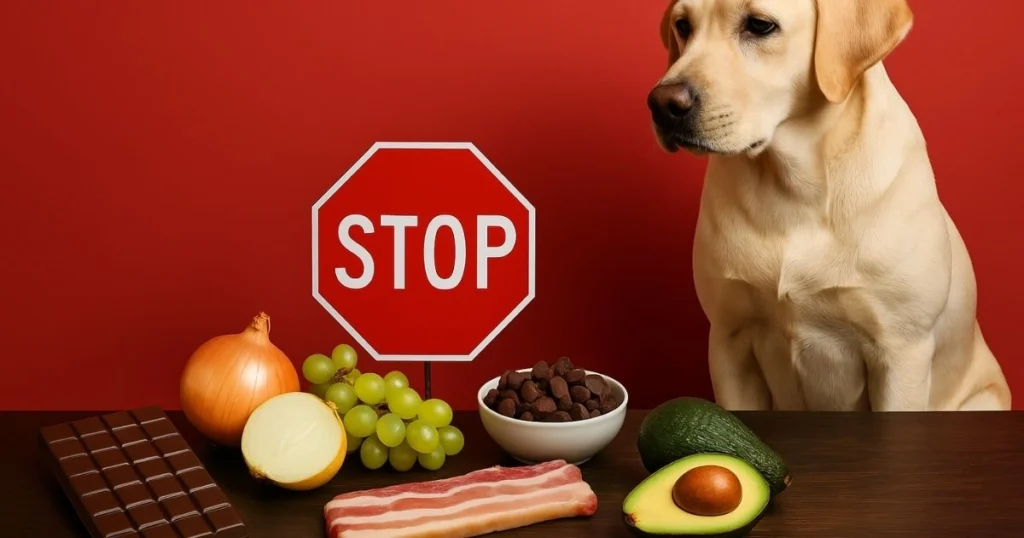
While proper nutrition focuses on what a pet should eat, knowing what they must avoid is equally, if not more, important for their safety. Many common human foods are toxic or dangerous to dogs and cats.
The Danger of Table Scraps
It is tempting to share food with a begging pet, but regularly feeding them table scraps can lead to serious consequences. Human foods are formulated for human bodies, not pet bodies, and introducing them regularly can cause digestive problems and serious nutrient imbalance because they lack the specific vitamins and minerals pets need.
The High-Fat Warning: Pancreatitis
One of the most dangerous results of feeding a pet human food is the risk of Pancreatitis. Pancreatitis is a painful and potentially life-threatening inflammation of the pancreas, which is an organ crucial for digestion.
The illness is most commonly triggered by giving a pet high-fat foods like bacon, gravy, turkey skin, butter-laden side dishes, or rich sauces. The fat overwhelms the pet’s digestive system, causing the pancreas to become severely inflamed. This leads to intense pain, vomiting, and requires immediate emergency care. This condition is particularly common during holidays when pet owners may relax rules and provide access to highly concentrated fats (like butter or drippings). Avoiding all high-fat table scraps is vital for prevention.
The Most Toxic Threats (Immediate Danger)
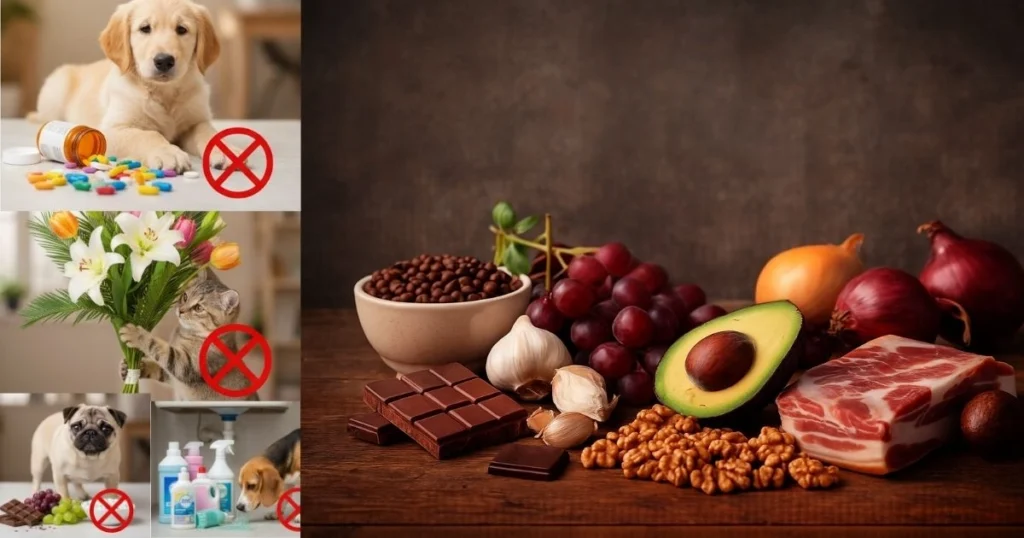
There are a few human ingredients that are immediately toxic and pose an extreme danger to pets:
- Chocolate = Poison: Chocolate contains two dangerous chemicals called theobromine and caffeine (called methylxanthines). Humans process these stimulants quickly, but dogs and cats process them very slowly. This slow processing allows the chemicals to build up to toxic levels, which can cause hyperactivity, vomiting, rapid heart rate, and fatal seizures. The darker the chocolate (like baking cocoa or dark chocolate), the more theobromine it contains, and the more dangerous it is.
- The Deadly Sweetener: Xylitol: This common artificial sweetener is found in many sugarless products like gum, candy, oral products, and some brands of peanut butter. For dogs, xylitol is extremely poisonous. It causes the dog’s body to rapidly release insulin, leading to a sudden, fatal drop in blood sugar (hypoglycemia). Pet guardians must always check the label of peanut butter before using it in pet treats or toys.
- Hidden Kidney Danger: Grapes and Raisins: These fruits are highly toxic to dogs and can cause acute kidney failure. Scientists still do not know the exact reason why these are toxic, so there is no known safe amount, and they must be kept completely out of reach.
Other Serious Hazards
- Onions, Garlic, and Chives: These ingredients, including onion or garlic powder, are toxic to both dogs and cats. They can damage a pet’s red blood cells, leading to weakness and severe illness. Cats are especially sensitive.
- Raw Bones: While feeding bones may seem natural, they should be avoided. Cooked or raw bones can cause serious problems, including potential choking, breaking teeth, or internal injury (perforation or obstruction) as they pass through the digestive system. Safe chew toys or dental chews are much better alternatives.
- Snack Bag Suffocation Risk: Thin, mylar-type chip or snack bags are an often-overlooked danger. Dogs, especially, may sniff them out. If a pet puts its head into the bag to find crumbs and breathes in, the thin plastic can trap air around the nose and mouth, causing rapid suffocation. All snack bags must be immediately secured or disposed of in a pet-proof trash bin.
Table 2: Toxic Human Foods: Keep Pets Safe!
| Human Food | Toxicity Level | Worst Problem It Causes |
| Chocolate | High/Severe | Causes heart issues, hyperactivity, and potentially fatal seizures. |
| Xylitol (Fake Sugar) | High/Severe | Rapid, deadly drop in blood sugar. |
| Grapes/Raisins | High/Severe | Can cause Kidney Failure. |
| Fatty Scraps | Medium/Severe | Painful illness called Pancreatitis. |
| Onions/Garlic | Medium/High | Damages red blood cells. |
VI. Becoming a Pet Food Pro
Understanding pet nutrition means realizing that every ingredient in a high-quality, balanced diet has a specific, essential purpose. The best pet food is one where ingredients work together harmoniously to provide a full spectrum of required nutrients.
The goal for every pet guardian is balance. Carbohydrate sources like grains provide fast energy and essential fatty acids for the skin. Fiber, often provided by ingredients like beet pulp, manages the digestive system, supports the crucial immune system in the gut, and helps maintain a healthy weight. Meanwhile, protein sources, including named meat meals and nutrient-rich organ meats (by-products), deliver concentrated building blocks and vital micronutrients like Vitamin A and calcium that muscle meat alone cannot fully supply.
To be the best food detective, pet guardians should always prioritize foods labeled as complete and balanced. Look specifically for named ingredients (like “Salmon Meal” and “Chicken By-Product Meal”) and avoid generic names to ensure quality and origin.
Finally, the most important rule of pet nutrition is safety: never share toxic human foods, especially high-fat scraps, chocolate, grapes, and products containing xylitol. Because every pet is unique—from puppies needing specific growth nutrients to senior pets requiring easy digestion—the ultimate authority on a pet’s ideal diet is always the veterinarian. Consulting a veterinarian ensures that the food chosen is perfectly tailored to keep that specific furry friend happy, healthy, and thriving.