
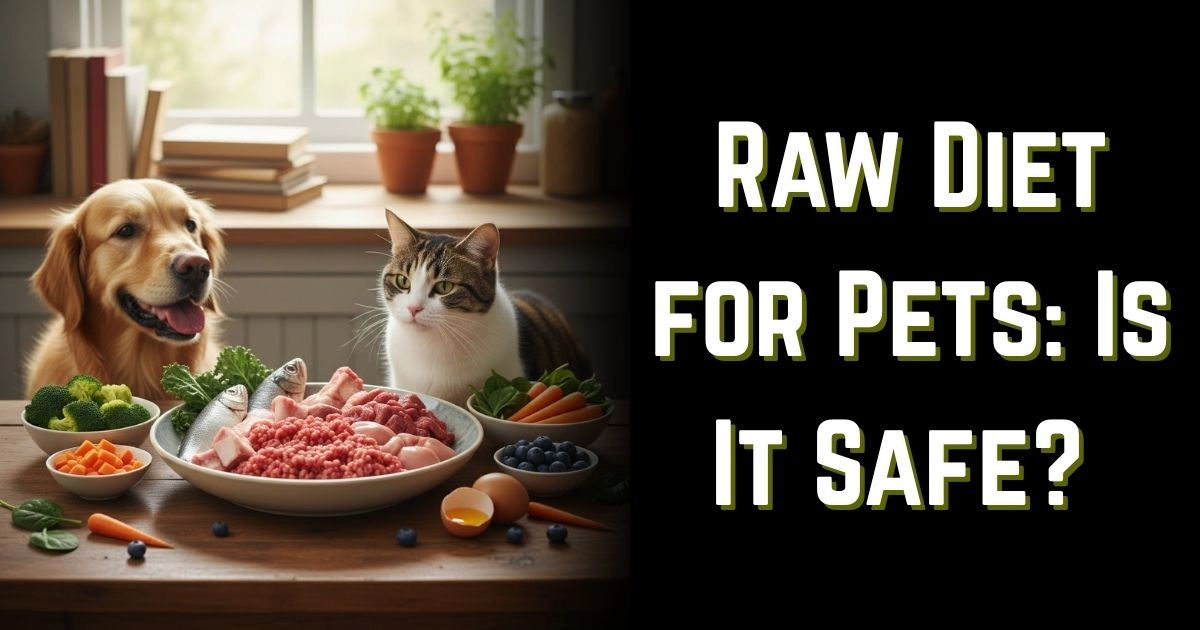
Feeding pets a Raw Meat-Based Diet (RMBD) has become very popular. Many people believe raw food is more natural, clean, and healthy. They feel raw meat is closer to what wild animals, like wolves and tigers, eat. But veterinary science shows a very different picture. Raw diets can cause serious health risks for pets and even for people in the same home.
This long and simple guide explains everything in easy English so every pet owner can make the safest choice.
What Is a Raw Diet and Why Do People Choose It?
A raw diet means feeding uncooked meat, raw bones, organs, and sometimes vegetables or fruits. Some owners buy frozen or freeze-dried raw food from shops, and others prepare it at home.
Pet owners choose raw food because they believe:
- it is a natural, ancestral diet
- it has less processing
- it looks like “real food”
- it may improve fur, energy, or stool quality
But experts say these changes often happen because the pet changed from a low-quality food to a better-quality one—not because the food is raw.
Are Raw Diets Really More Nutritious? What Science Says
Supporters say raw food gives:
- better digestion
- shiny skin and coat
- stronger teeth
- fewer allergies
But scientific studies show that most of these claims are not proven.
Many raw diets do not have enough vitamins and minerals. This can cause:
- weak bones
- slow growth
- hair loss
- low immunity
- serious health problems in puppies
One dangerous condition linked to raw diets is Nutritional Secondary Hyperparathyroidism (NSH). This happens when pets do not get enough calcium or vitamin D. Their bodies then pull calcium from their bones, making the bones very weak.
Raw bones also do not clean teeth. Instead, they often cause:
- broken teeth
- mouth injuries
- blockages inside the stomach
So, the idea that raw diets improve teeth is a myth.
Raw Diet Claims vs. Scientific Reality (Table)
Below is a simple table showing what people claim vs. what science says.
Scientific Check: Raw Diet Claims vs. Real Truth
| Raw Diet Claim | What Actually Happens | Expert View |
|---|---|---|
| Better Digestion | Raw meat digests a bit faster but not enough to improve health. | Evidence is weak. |
| More Nutrition | Many raw diets miss calcium, iodine, zinc, vitamin A. | Not balanced; risky. |
| Stronger Teeth | Raw bones can break teeth or block intestines. | Not safe for dental health. |
| Better Coat/Skin | Improvement comes from better ingredients, not raw food. | Not specific to raw diet. |
| Natural Enzymes Help | Enzymes get destroyed in the stomach. | Not true scientifically. |
The Biggest Danger: Harmful Germs
This is the number one risk of raw feeding.
Raw meat often contains:
- Salmonella
- E. coli
- Listeria
- Campylobacter
Freezing or drying raw food does not kill these germs. Only cooking destroys them.
Pets who eat raw food may look healthy but can still spread germs through:
- saliva
- licking
- bowls
- toys
- poop
This means bacteria can easily enter your home. These germs are very dangerous for:
- babies
- small children
- elderly people
- pregnant women
- sick or weak people
There have been real cases where small children got life-threatening infections just because the dog in the home was eating raw food.
Antibiotic-Resistant Bacteria: A Hidden Threat
Another big danger is antibiotic-resistant bacteria. These bacteria do not get killed easily by medicines. Raw meat often contains them.
Dogs that eat raw food have a higher chance of carrying ESBL-E coli, a dangerous resistant bacteria. Studies show these bacteria can move from:
farm → raw meat → dog → human in the home
This makes raw feeding not only risky but also a global health problem.
Nutrition Problems in Raw Diets
Many raw diets are missing essential nutrients. Pets need the right amount of:
- calcium
- phosphorus
- iodine
- zinc
- copper
- vitamin A
- omega-3 fatty acids (EPA & DHA)
If these are missing or imbalanced, it can cause:
- weak bones
- slow growth
- thyroid problems
- skin infections
- poor brain development
Raw diets often need supplements like iodine (from seaweed) and omega-3s (from fish oil). This shows that raw feeding is not natural and simple. It needs scientific planning.
What Do Major Health Organizations Say?
Top health groups strongly warn against raw diets:
- CDC: Says raw pet food spreads harmful germs to pets and humans.
- AVMA (American Veterinary Medical Association): Advises not to feed raw diets because pets can carry bacteria even if they look healthy.
- AAHA: Disapproves raw diets due to high infection risk.
- Cornell Vet School: Says risks are far greater than any benefits.
These guidelines are based on scientific studies, not pet food company influence.
If Someone Still Wants to Feed Raw, What Is the Required Safety?
Raw food needs strict safety steps, similar to handling dangerous meat in a laboratory.
- Raw food must be kept frozen.
- Thaw only in the refrigerator.
- Do not wash raw meat.
- Use separate bowls and utensils for pets.
- Disinfect all surfaces with hot water and bleach.
- Wash hands for 20 seconds after touching food or pets.
- Throw away leftover raw food after 2 hours.
These steps show that raw food naturally has high risks.
Cost and Safer Alternatives
Raw diets are expensive. They cost much more than high-quality cooked food. Many owners believe raw food saves money on vet visits, but this is not true. Raw diets can cause:
- infections
- broken teeth
- bone blockages
- emergency surgery
- antibiotic-resistant illnesses
These treatments can be extremely costly.
Safer options include:
- gently cooked fresh food
- personalized vet-formulated diets
- high-quality kibble or wet food
These give all the benefits without the dangers.
Conclusion: What Should Pet Owners Do?
The idea of feeding pets “natural” food sounds beautiful. But real science shows raw diets carry serious risks for pets and humans. The benefits are mostly personal stories, not proven facts.
The strongest advice from experts is clear:
Raw diets are unsafe and should be avoided.
If you want a healthy, natural diet for your pet, choose:
- cooked fresh diets
- balanced commercial foods
- guidance from a veterinary nutritionist
These options protect both your pet and your family.
Frequently Asked Questions (FAQs)
1. Are raw diets really dangerous or is this a lie by kibble companies?
Raw diets are dangerous because they spread germs like Salmonella and E. coli. This is proven by CDC, AVMA, FDA, and Cornell University. These groups have no connection with kibble companies.
2. Does freezing or freeze-drying kill bacteria?
No. Freezing keeps bacteria alive. Drying helps bacteria survive even longer. Only cooking kills germs.
3. Can puppies eat raw food safely?
No. Puppies need perfect calcium and vitamin levels. Raw diets often miss these and can cause weak bones or life-threatening diseases.
4. Does raw food cause antibiotic resistance?
Yes. Raw meat can carry bacteria that resist medicine. These bacteria can spread from pets to humans.
5. Are grains bad for pets?
No. Most food allergies come from proteins like chicken or beef, not grains. Grains give fiber and nutrients.
6. Can cats be vegetarian or vegan?
No. Cats are obligate carnivores. They need nutrients only found in animal proteins. Vegan diets can cause blindness or death.
7. Why do some people see shiny coats after switching to raw?
Because they moved from low-quality food to better quality ingredients. This happens with cooked diets too.
8. What is the most important safety rule if I still feed raw?
Always disinfect everything and wash hands for 20 seconds. Raw meat spreads germs very easily.
9. Does raw food clean teeth?
No. Raw bones can break teeth or get stuck inside the stomach.
10. Are there any proven benefits of raw diets?
Only very small digestion changes. No major proven health benefits.