
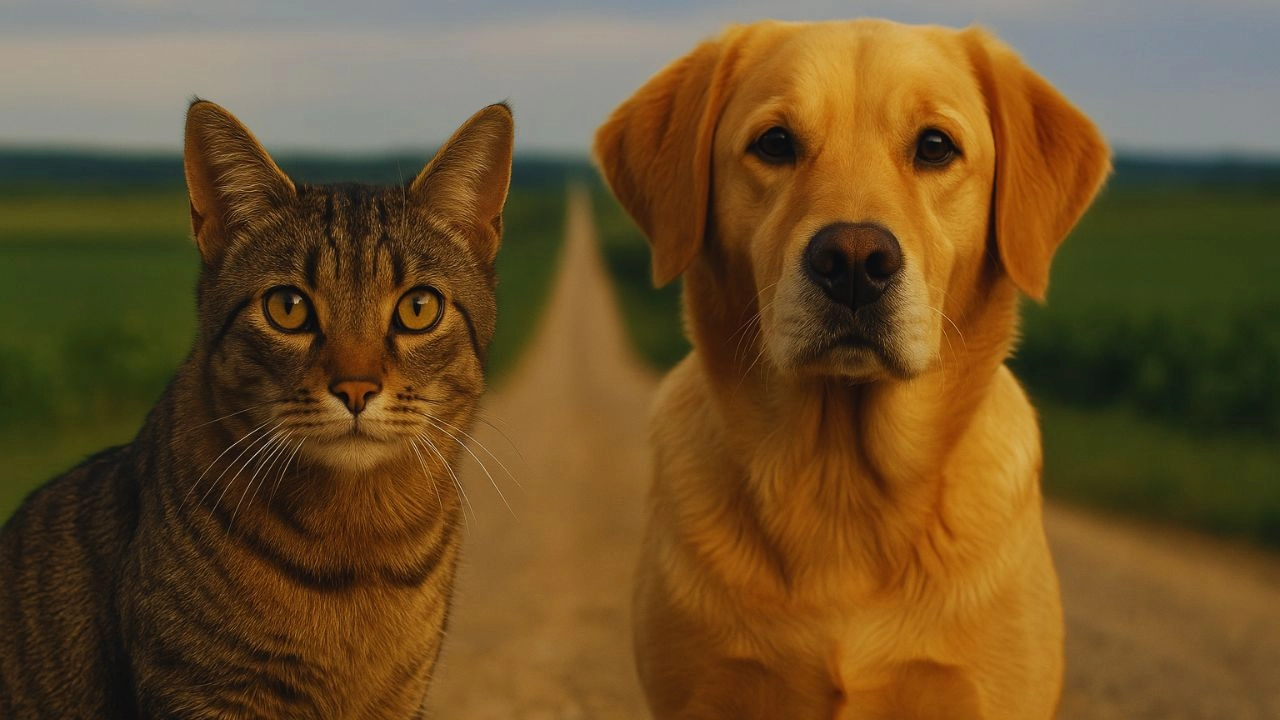
Many pet owners have heard amazing stories of cats and dogs traveling long distances to return home. Whether it is a lost dog crossing towns or a cat reappearing weeks after disappearing, these events feel mysterious. Yet behind these incredible journeys lies an extraordinary natural skill: the homing ability.
Cats and dogs both possess hidden powers that help them navigate through unfamiliar places and still locate their families. Although scientists still have much to uncover, research continues to reveal the true strength of these ancient instincts.
Pet Navigation Abilities
| Pet | Primary Navigation Tool | How It Helps Them Find Home |
|---|---|---|
| Dogs | Magnetic field sensing | Acts like an internal compass |
| Cats | Visual and scent mapping | Tracks territory and landmarks |
| Dogs & Cats | Emotional bonding | Motivates them to continue searching |
| Cats | Stealth movement | Helps them travel safely and quietly |
| Dogs | Powerful smell detection | Follows scent trails over long distances |
The Science Behind Their Internal Compass
One reason pets excel at finding home is their strong sense of direction. Dogs seem to detect the Earth’s magnetic field, which works like a built-in compass. Studies show that dogs naturally align their bodies along the north–south axis, indicating their ability to sense magnetic signals. This natural orientation may guide them when lost. Cats, too, appear to use magnetic sensitivity, but their navigation system is more complex and still being researched.
Another essential tool is their extraordinary sense of smell. Dogs can detect scent particles from far away, sometimes even days after the trail was made. Their noses are powerful enough to follow faint odor patterns directly toward familiar places. Cats also rely on smell but in a more strategic way. They create scent maps of their territory, helping them remember routes, boundaries and safe zones.
Also Read: How Animals Communicate Secretly Using Invisible Signals
Memory, Landmarks, and Emotional Connection
Memory plays a major role in how pets find their way back. Pets remember the layout of streets, the direction of sunlight, the sound of traffic and even the smell of specific locations. Dogs often recognize distant noises from their neighborhood, while cats depend more on visual cues and environmental patterns.
Emotional bonding strongly influences navigation. Pets feel deeply connected to their homes and owners. This attachment encourages them to keep moving despite challenges. Stories of dogs crossing forests, highways and rivers show how powerful this emotional drive is. Cats have also returned from incredible distances, guided by their sense of safety associated with home.
How Pets Choose Safe Routes
Pets naturally avoid danger while navigating. Dogs tend to follow open paths, rivers and wooded trails, reducing the risk of running into traffic. Cats choose quiet shortcuts, such as fences, rooftops or narrow passages, keeping themselves hidden. These instinctive decisions significantly increase their chances of returning safely.
Although humans rely on GPS and maps, pets follow a combination of instinct, memory, senses and emotional strength. Their homing ability remains one of nature’s most impressive survival skills and continues to fascinate scientists and pet owners alike.
FAQs
Q1. How far can a dog travel to find home?
Some dogs have traveled hundreds of miles, guided by scent, memory and magnetic instincts.
Q2. Do cats use magnetic fields too?
Evidence suggests they might, but cats rely more on visual memory and territorial scent mapping.
Q3. Why do some pets return but others do not?
Distance, environment, health and the pet’s unique navigation ability all play a role.
Q4. Can pets recognize owners from far away?
Yes, pets can identify their owners by scent, voice and even footsteps from surprising distances.
Q5. Which species has stronger homing instincts?
Dogs depend heavily on smell and magnetic direction, while cats rely on memory and territory awareness—both are remarkable in their own ways.