

I. What Does “Exotic Pet” Really Mean?
An exotic pet is an animal that is rare, unusual, or generally considered wild, even when kept at home. These pets are not typical household companions like cats or dogs.
The word “exotic” often simply means the animal is not native to the owner’s region. For example, a hedgehog is considered exotic in Texas, but in countries where hedgehogs naturally live, they are just part of everyday wildlife. Because of this, the meaning of “exotic” changes based on culture, location, and local wildlife laws. Experts sometimes call these species “zoological companion animals.”
The Important Legal Difference
Legally, the definition becomes very specific. In the United States, the law defines “pet animals” as common household species like dogs, cats, rabbits, guinea pigs, and hamsters. The law excludes exotic and wild animals from this category. Exotic animals are viewed as non-native or foreign in origin.
This legal difference shows the biggest misunderstanding people have. A domesticated animal has lived alongside humans for thousands of years, with its body and behavior adapted to human homes. A friendly exotic animal is usually only tame, not domesticated. Its needs remain genetically wild, no matter how gentle it seems. If an owner doesn’t understand these natural needs, the animal may suffer.
II. Popular Exotic Animals and Their Unique World
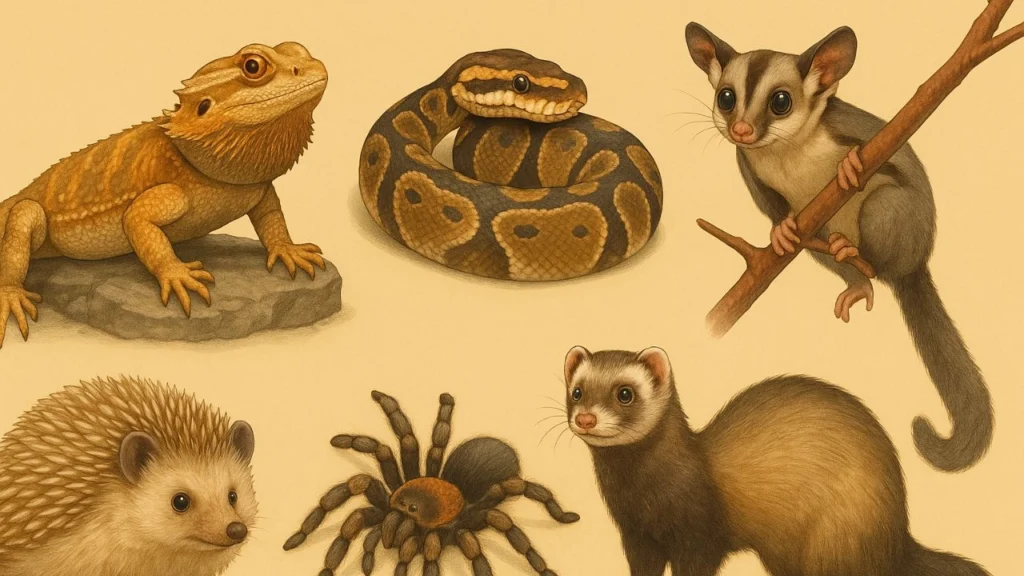
The world of exotic pets is huge. It includes reptiles (snakes, turtles, lizards), amphibians (frogs, salamanders), and even very small creatures like tarantulas, scorpions, and stick insects.
The Popular Reptiles
Reptiles are among the most common exotic pets.
- Bearded Dragons are popular beginner-friendly pets. They are usually calm and rarely bite. Native to central Australia, they puff out the skin under their chin—looking like a black beard—when threatened. Adults can grow up to 24 inches long.
- Ball Pythons are known for their docile temperament, but they need an enclosure with secure locks and precise humidity levels.
The Gliding Sugar Glider
Sugar gliders are tiny, tree-dwelling marsupials that carry their young in a pouch. They come from Australia, Indonesia, and Papua New Guinea. With flaps of skin stretching from their wrists to ankles, they can glide between trees.
They are nocturnal, highly social, and live in groups in the wild. Sugar gliders communicate with sharp warning calls like “yip-yip!” They are omnivores, eating tree sap, insects, pollen, and occasionally small birds.
Other Unique Mammals
- Ferrets are carnivores with an extremely high metabolism, needing 8–10 small meals daily.
- Hedgehogs are also becoming popular but require careful temperature control and gentle handling, as they use their spines as a defense mechanism.
III. The Expert Care Exotic Pets Must Have
Caring for an exotic pet requires specialized knowledge, equipment, and often high costs. If their needs are not met perfectly, they can develop serious health problems.
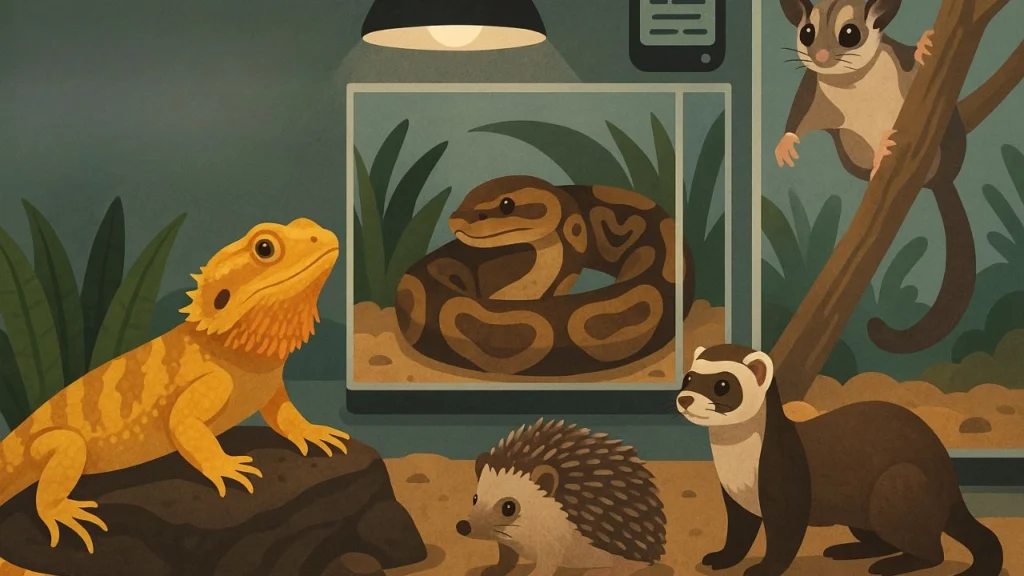
Building a Perfect Home
Their enclosure must mimic the natural habitat they would experience in the wild. This makes exotic pet ownership feel like becoming an environmental engineer at home.
Reptiles require UV lighting, 24-hour heat sources, and humidity control. Sugar gliders need tall enclosures for climbing. All species require room to burrow, climb, bask, or perform other natural behaviors. Without this, the animal’s health declines.
Diet and Commitment
Exotic diets can be complex and expensive. Sugar gliders, for example, require carefully balanced nutrition.
These pets often don’t behave or bond like traditional pets. Some dislike being touched, and loud noises or bright lights can cause stress. Stress may lead them to hide, refuse food, or even become aggressive.
Many exotic animals also live long lives. A bearded dragon can live up to 15 years, requiring long-term dedication.
IV. Your Pet Needs a Specialty Vet
Exotic pets are biologically different from cats and dogs, so they require specialty veterinarians with advanced training.
You should choose a vet who knows your exact species. Reptiles need vets who understand temperature-related health, while birds require experts in respiratory care.
Look for vets who are board-certified or trained in exotic animal medicine. The clinic must also have proper equipment for non-traditional animals.
V. Health and Safety: Understanding Germs
One major concern with exotic pets is zoonotic diseases, which are illnesses passed from animals to humans.
The Salmonella Threat
Salmonella is the most common risk from reptiles and amphibians. The bacteria live naturally in their digestive systems and spread through handling, habitats, and even food bowls.
The best protection is simple: wash your hands, before and after handling them.
Other Germs
- Campylobacter can spread from rabbits or ferrets and cause diarrhea.
- Parrot Fever (Psittacosis) affects birds like parrots and cockatiels, causing breathing problems in both birds and people.
VI. Understanding the Law and Permits
Exotic pet laws are strict and vary greatly by location. Courts consistently support state and city rules that limit or ban certain animals.
Why Regulation Is Necessary
Laws help protect public safety and conservation efforts. Some exotic animals can spread disease, while others—like big cats—pose physical danger. Escaped animals may also harm local wildlife or damage ecosystems.
Because laws vary, an animal may be legal in one state and banned in the next. For example:
- Sugar gliders are allowed in Florida,
- but banned in California.
Bans and Paperwork
Many areas ban species like apes, big cats, and venomous snakes. Even small pets such as skunks or hedgehogs may be banned to protect wild ecosystems.
Other animals require a special permit, plus inspections to verify proper housing. Federal laws like the Endangered Species Act also apply to species threatened in the wild.
VII. The Bigger Picture: Welfare and the Environment
The rise in exotic pet popularity—accelerated by the internet and social media—has caused major animal welfare and environmental problems.
The Abandonment Crisis
Many people buy exotic pets impulsively. Once they realize the difficulty and cost, they surrender or abandon them.
Rescue centers report animals arriving with malnutrition, bone problems, or stress-related diseases. In 2025, the RSPCA recorded over 24,000 abandonment cases, a 23% increase from 2024.
The Invasive Species Threat
Released exotic pets can become invasive species. They outcompete native animals and damage ecosystems.
Non-native species such as pythons, iguanas, and chameleons now breed freely in states like Florida and Texas. Invasive species threaten 42% of endangered animals and cost the U.S. billions in damage. Even increased sightings of animals like cougars in Michigan may be linked to released pets.
VIII. Making the Responsible Decision
If you want an exotic pet, you must research everything: size, lifespan, diet, habitat, legality, and long-term care.
A responsible exotic pet should be captive-bred, non-dangerous, non-venomous, and not a risk to your local environment if it escapes. Always check your state and city laws before bringing one home.
Comparison Table
| Commitment Area | Traditional Pet (Dog or Cat) | Exotic Pet (Reptile, Sugar Glider, etc.) |
|---|---|---|
| Genetic Status | Fully domesticated | Wild species, only tame |
| Care Difficulty | Easy to understand | Needs specialized habitat & climate |
| Lifespan | Predictable | Some live for decades |
| Legal Status | Usually legal | Often regulated or banned |
| Health Risk | Common, known | Higher risk of zoonotic diseases |
The level of care, patience, and scientific understanding required for exotic pets is extremely high. The growing number of abandonment cases shows how often owners underestimate this responsibility. By learning about the wild nature of these animals and respecting their unique needs, owners can give them the healthy life they deserve.