
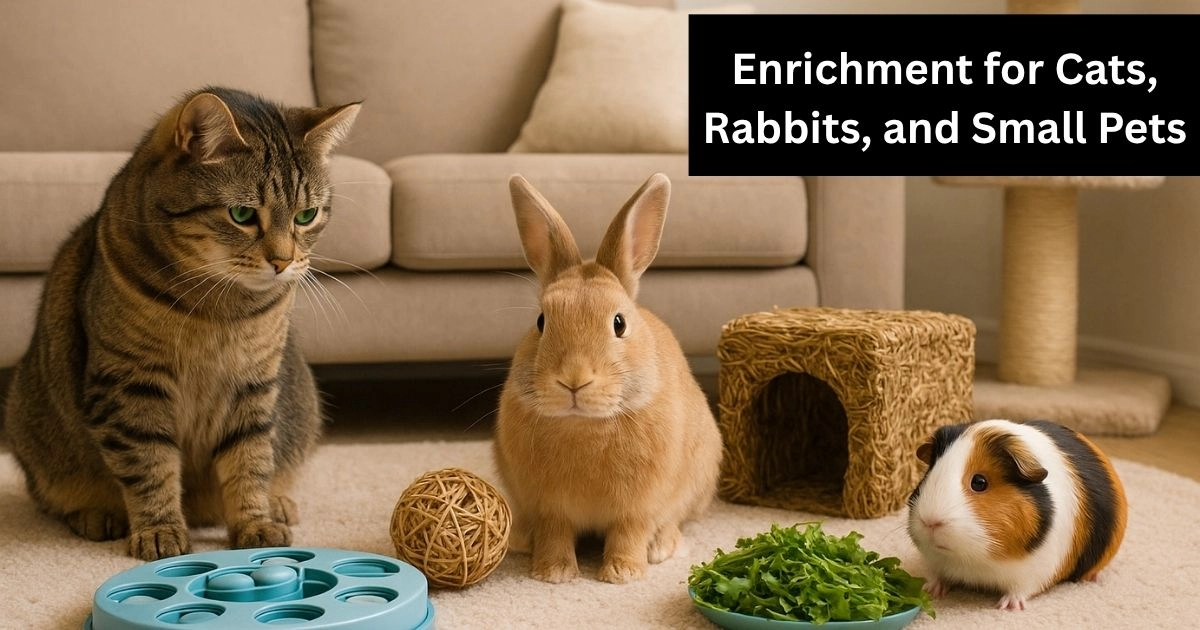
Keeping your cats, rabbits, and small pets happy is not just about food and water. They also need fun, play, and small daily activities that match their natural habits. When pets get the right toys, space to explore, and chances to do things like climb, dig, or chew, they feel safer, calmer, and more active. A few simple changes at home can make their day much more fun and help them stay healthy for a long time.
I. Why toys and games are not just fun
Giving your pet toys and chances to play is not just a treat. It is an important part of their health. Scientists and vets say that enrichment — changing the pet’s home so they can do natural things like hunt, dig, climb, and chew — helps pets feel calm and stay healthy. If pets do not get the right kind of mental activity, they can become stressed. Stress can make them act badly or even become sick. This article explains how to give the right kind of play and safety for cats, rabbits, and small mammals.
II. Cats — feed the hunter and let them climb
Cats are natural hunters. They like to stalk, chase, catch, and then eat. A good toy or game should let a cat finish this whole hunting process so the cat does not feel frustrated.
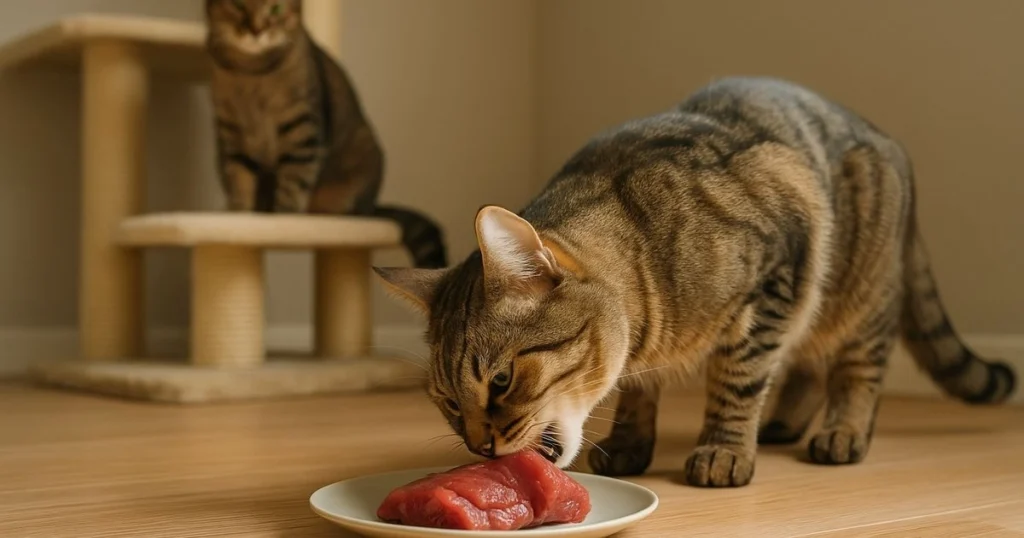
Interactive play with a wand toy or a toy on a string helps a cat practice hunting. Move the toy like real prey: hide it, make it twitch, and then let the cat catch a small toy or get a treat at the end. This finish is important. If you only use a laser pointer, a cat will chase and never catch anything. That can make some cats anxious. If you use a laser, always end the play by giving the cat a real toy or a treat to hold and bite.
Cats also love high places. Giving cats vertical space such as a cat tree, shelves, or a safe balcony area helps them feel safe. When cats can climb and look around from above, they feel more relaxed. In homes with more than one cat, high places help avoid fights because each cat can claim its own spot.
Foraging and food puzzles are very good for cats. Scatter-feeding a little kibble across the floor or hiding food in a puzzle bowl makes the cat work a little for its food. This is natural and calming. Catnip can help many cats play and relax. Keep catnip in a sealed container so it stays fresh. When a cat eats catnip it often feels calm, while smelling it can make the cat excited and playful.
III. Big safety warning for all pet owners — never ignore this
The toy market is not perfectly safe, so owners must be careful. Some toys and household items can be very dangerous, especially for cats.

A major danger is linear foreign bodies. These are long thin things like string, yarn, ribbon, dental floss, or tinsel. If a cat swallows string and part of it stays stuck, the bowel can get damaged. The intestines can bunch up, and the string can cut the bowel. This can cause a very serious infection inside the belly and needs emergency surgery. Never leave string-like toys or decorations where a cat can reach them. Always supervise a cat with string-like items and remove them after play.
Other risks include small parts, stuffing, and weak materials. Small bells, plastic eyes, or loose stuffing can come off and be swallowed. Soft toys with stuffing can be dangerous for pets that like to shred things. Some plastics and vinyl contain bad chemicals like BPA or phthalates that can be harmful if a pet chews them. Always pick toys made from safe, non-toxic materials and throw away any toy that starts to break.
IV. Rabbits and guinea pigs — chewing is life
Rabbits and guinea pigs need to chew all the time because their teeth grow without stopping. If they do not chew enough, their teeth can get too long and cause pain and trouble eating. The best thing for them is a constant supply of grass hay like Timothy hay. Hay is the number one chew material and it keeps teeth at the right length.
Other safe chews include dried apple sticks, willow, birch, or special wooden chew toys made for pets. Avoid cedar wood and treated lumber because these can make pets sick. Do not give wild branches unless you are sure they are clean and safe. Cardboard tubes, seagrass mats, and bamboo are also good for chewing and making the pet happy.
Rabbits and guinea pigs also need space to hide and feel safe. Homes for them should have places to burrow or hide because these animals are prey by nature and feel safer with hiding spots.
V. Hamsters, gerbils and other small rodents — digging and hiding are essential
Small rodents like hamsters and gerbils love to make tunnels and burrows. Give them deep beds of soft bedding like coconut fiber or special paper-based bedding so they can dig and build tunnels. Exercise wheels are important, but choose ones with a solid surface to avoid hurting their feet or tails. Hide food in boxes, paper tubes, or small logs so they have to search and work for it. This makes them feel safe and busy, and it keeps them from being bored.
VI. Keep toys fresh and safe — rotation, cleaning, and replacement
A toy is only useful if it stays clean and whole. Pets get bored if the same toys are always available. Rotate toys by keeping only a few out and storing others away. Change the selection every week or two. Rotation makes toys feel new again and keeps your pet interested.
Cleaning is very important. Toys get wet, dirty, and full of germs. Wash soft toys in a washing machine with gentle detergent and let them dry completely. Clean rubber and plastic toys with warm water and white vinegar, then rinse well. Rope toys can be machine washed, but let them dry fully so they do not grow mold. Avoid cleaning with strong chemicals or bleach because these can be toxic.
Always check toys for damage. If a toy has tears, cracks, loose parts, or sharp edges, throw it away. Even a small hole in a rubber toy can become a big danger if the pet chews it and swallows pieces.
VII. Materials and why choice matters
Pick toys made from safe materials like natural rubber, organic cotton, or recycled rubber. These tend not to have harmful chemicals. Wooden toys can be good if they are untreated and safe for pets. Avoid toys that are very cheap and made of thin plastic or vinyl because they can break easily and may contain bad chemicals.
Some toys are labeled eco-friendly. These are often safer, but always check the materials and how the toy is made. A toy that looks safe but falls apart in a day is not safe.
VIII. Why laser pointers should be used with care
Laser pointers can be fun, but they must be used carefully. The cat chases a dot but never catches it, and this can cause frustration. If you use a laser pointer, always end the session with a real toy or a treat that the cat can touch and bite. That finish gives the cat a sense of success. If you do not do this, some cats can start to act oddly and look for lights or reflections all the time.
IX. A simple plan for safe enrichment at home
Make a plan to keep enrichment safe and useful. For cats, give short interactive play sessions every day, add high shelves or a cat tree, and give a puzzle feeder at meal times. For rabbits and guinea pigs, always provide unlimited hay, safe chews, and hiding places. For hamsters and gerbils, deep bedding for digging, a solid-surface wheel, and many hideouts will help them feel secure. Rotate toys, clean them often, and replace damaged items right away.
Frequently Asked Questions (FAQs)
If string is dangerous for cats, what can I use instead?
Use short, sturdy toys or a wand toy without loose threads. Always supervise play with anything that can come apart.
How often should I clean toys?
Clean toys two to three times a week. Soft toys can go in the washing machine and rubber toys can be washed with warm water and vinegar.
What hay is best for rabbits and guinea pigs?
Timothy hay is the top choice. It should be available all the time so their teeth stay healthy.
Can small mammals eat wooden sticks from the yard?
Only if the sticks are safe, clean, and from a safe tree. It is better to buy kiln-dried or pet-safe wood from a pet store.
Is catnip safe for all cats?
No. Only about half of cats react to catnip. For cats that do react, catnip can be fun and encourage play. For others, it does nothing.
What should I do if my pet swallows toy stuffing?
Contact your vet right away. Swallowed stuffing can block the stomach or intestines and may need emergency care.
Play and the right toys help pets stay healthy in body and mind. For cats, it means letting them hunt and climb. For rabbits and guinea pigs, it means lots of chewing and hay. For small rodents, it means digging and hiding. Keep toys safe, clean, and interesting. Make choices that match your pet’s natural needs. Doing this is one of the best ways to keep your pet happy and well for many years.