

I. The Quiet Revolution in Animal Welfare
1.1 A Simple Answer with Big Details
Many pet owners ask whether playing music helps their animals relax. The short, science-backed answer is yes — but only when the right kind of music is used. Simply turning on any random song won’t do. The tune must match the animal’s hearing and biology.
Researchers have tested how sound affects dogs, cats, and even large zoo animals. They find music can be a safe, non-invasive way to improve animal welfare. In other words, you don’t need medicine or big changes — just thoughtful sound. The field is growing fast, and experts now design sounds that fit how each species hears and thinks. If music is chosen poorly, it can even cause more stress. So knowing which rhythms and frequencies actually soothe an animal matters a lot.
1.2 Defining Calmness: More Than Just Looking Sleepy
Scientists don’t judge calmness only by how an animal looks. They use clear, measurable signs from both behavior and the body.
Behavioral signs of stress include pacing, swaying, barking, or standing restlessly. A calm animal spends more time resting or lying quietly. For example, elephants kept in captivity often show repetitive actions like trunk tossing or pacing. When calming music is played, these behaviors drop — showing real improvement.
Physiological measures are also used. These include breathing rate, heart rate, and especially Heart Rate Variability (HRV). HRV looks at the time between heartbeats. Low HRV means the animal’s sympathetic (“fight-or-flight”) system is active. High HRV shows the parasympathetic (rest-and-digest) system is in charge — a true sign of relaxation. Studies in dogs and cats use HRV to show that properly designed music shifts their bodies toward calm.
1.3 The Amazing Difference in Animal Hearing
One big reason human music often fails is that animals hear differently. Dogs and cats hear much higher and more sensitive ranges than people do.
Humans usually hear from 20 Hz to about 23,000 Hz. Most human music sits in the lower part of that range.
Dogs can hear up to 45,000–60,000 Hz, so they’re sensitive to high-pitched sounds we can’t hear. Cats can hear even higher — up to 64,000–85,000 Hz. That’s why human music often doesn’t reach the parts of sound that matter to them. Because of these differences, species-specific music is usually needed.
Table 1: Auditory Ranges (Hz)
| Species | Highest Frequency Heard (approx.) | Note |
|---|---|---|
| Human | 23,000 Hz | Basis for human music and speech |
| Dog | 45,000–60,000 Hz | Much higher sensitivity than humans |
| Cat | 64,000–85,000 Hz | Even broader range than dogs |
II. Dogs: The Genres That Work and the Science of Tempo
2.1 General Preferences: The Genres That Work
Research shows dogs relax most with a few human genres: classical, reggae, and soft rock. These styles often have slower, predictable rhythms and fewer sudden changes in loudness or pitch. That steadiness helps dogs tune out stressful background noises. Shelters and kennels have used these genres as effective enrichment to lower stress.
2.2 The Calming Power of Classical Music
Classical music has been studied a lot and often works well in stressful situations, like grooming. In one study, music played at about 75 dB during bathing, drying, clipping, and nail trimming made dogs, especially males, behave more calmly. The biggest differences showed up during the most stressful parts — drying and clipping. This suggests classical music can make routine care less frightening for many dogs.
2.3 The Importance of Tempo and Simplicity
The structure of music matters more than the composer. Psychoacoustics — how sound affects the nervous system — shows that simplified music at a slow tempo works best for dogs. The ideal speed is about 50–60 beats per minute (bpm). That slow rhythm seems to match a relaxed heartbeat and causes entrainment — the animal’s internal rhythms synchronizing to the music.
Specially designed, simple music at this tempo produced dramatic results: in noisy shelters more than 70% of dogs became calmer; in quiet homes about 85% calmed, and over half fell asleep. This shows that matching tempo and simplicity to a dog’s biology is key.
2.4 The Music to Avoid and Why Variety Matters
Not all music helps. Heavy metal tends to increase fear behaviors in dogs — more standing and barking. Pop or human conversation usually has little effect, possibly because dogs are used to hearing them.
Also, animals habituate. If the same songs play all the time, the calming effect fades. Use music strategically and provide variety. Don’t play it 24/7. Instead, use it during known stress times to mask irritating noises like traffic or construction and keep the environment soothing.
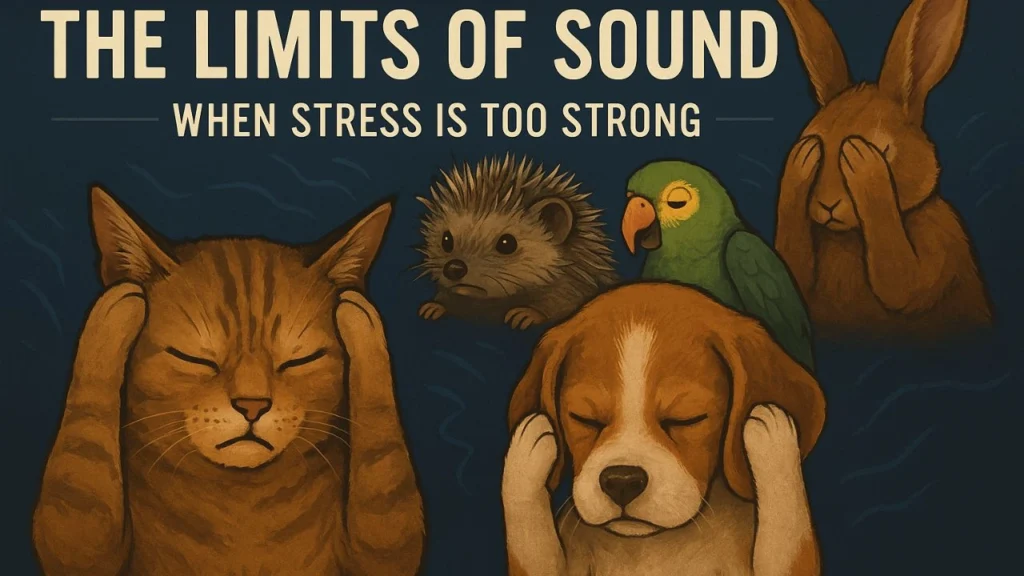
III. The Limits of Sound: When Stress Is Too Strong
3.1 Acute vs. Chronic Stress
Music is a powerful tool, but it isn’t a cure-all. It works best for chronic stress — ongoing anxiety like the constant noise in kennels. For sudden, intense fear (acute stress), such as a frightening vet visit or a loud thunderstorm, music often cannot overcome the immediate physiological response. In those cases, stress hormones spike and music’s slower calming effect can’t compete.
3.2 Biometric Evidence of Limitation
When animals are highly stressed or sedated, calming music may not change deep sedation or stress markers. Very loud background noise (80–85 dB) also prevents relaxation, even with music. Managing the volume and overall sound environment is just as important as the music itself. Music affects the Autonomic Nervous System and needs time to change heart rhythms; sudden, strong stressors can override this process.
3.3 The Audiobook Contradiction
Studies on audiobooks show mixed results. In some kennels, audiobooks increased restful behavior more than music or silence. In other situations — especially short-term separation anxiety — audiobooks had little calming effect and sometimes made dogs more alert. That may be because a human voice without the person’s smell or sight confuses dogs; they expect the person to appear, so they stay tense, searching for them. In short, human speech can calm in some chronic settings but can also cause confusion during acute stress.
IV. Cats: The Absolute Need for Feline-Specific Tunes

4.1 Why Our Music Fails Cats
Most human music doesn’t reach the frequencies or rhythms that matter to cats. Because cats hear so high (up to 85,000 Hz), low-frequency human music misses the signals that affect their nervous system. Classical music may help a little by masking noise, but it is usually less effective than for dogs.
4.2 Music Based on Purrs and Suckling
Researchers created feline-specific music using bioacoustic clues from cat behavior. The music includes higher frequencies and rhythmic pulses that mirror comforting cat sounds: suckling (~250 bpm) and purring-like pulses (~1380 bpm). These pulses are built into melodies that humans find acceptable, so they can be used at home or in clinics without annoying people. This approach recognizes that the relaxing rhythms for cats are very different from those for dogs.
4.3 Clinical Proof: Better Than Classical
Clinical studies show cat-specific music outperforms classical music and silence. Cats listening to tailored compositions had lower pulse rates and higher HRV, evidence of real relaxation. During vet exams, these cats were calmer and easier to handle, helping staff take accurate measurements. In short, music designed for cat hearing works best.
V. Beyond Pets: Calming Giants and Other Species
5.1 Auditory Enrichment in Zoos
Auditory enrichment isn’t just for pets. Zoos and farms use sound to improve welfare in animals that face chronic stress from captivity. Proper sound can reduce repetitive, stress-related behaviors and boost overall well-being.
5.2 Elephants and Classical Music
In zoo studies, classical music reduced stereotypic behaviors in Asian elephants, like swaying and trunk tossing. Normal behaviors like feeding stayed the same, suggesting music provided positive sensory stimulation that helped reduce stress.
5.3 Gorillas and the Power of Nature
Not every species prefers human music. For gorillas, classical or rock music increased stress behaviors. Naturalistic sounds — noises from their native habitats or species-specific social calls — were far more calming. This shows sound enrichment must fit the species’ natural context; what soothes one animal can agitate another.
VI. Expert Recommendations: How to Create a Calming Sound Sanctuary
6.1 Go Species-Specific Every Time
Always use music tailored to the animal’s hearing. Generic human relaxation tracks usually miss the mark. For dogs, choose music with low pitch, slow tempo (50–60 bpm), and simple arrangements. For cats, use music that mimics feline vocal ranges and includes purring and suckling pulses. These scientifically designed sounds are proven to lower stress.
6.2 Volume Must Be Low
Animals have sensitive ears. Even calming music played loudly can cause stress. Keep volume low — enough to mask disruptive noises like traffic but not so high that it becomes intrusive. High-intensity noise cancels out relaxation.
6.3 Use Music Strategically
Don’t play the same tracks all day. Animals habituate to repeated sounds and the effect fades. Use music during specific stressors: travel, grooming, vet visits, thunderstorms, or when pets are left alone. Strategic, intermittent use keeps the music effective.
6.4 Watch for Context
Know the difference between manageable chronic stress and overwhelming acute stress. Music helps long-term stress but is not a substitute for behavior training or medical treatment for severe anxiety. If a pet has intense phobias or panic, consult a vet or behaviorist.
VII. Conclusion: A Proven Tool for Pet Comfort
Does music make animals calmer? The research says yes, when the sound matches the listener.
- For dogs, classical, soft rock, and reggae help — especially when the music is simplified and played at 50–60 bpm to support physiological entrainment.
- For cats, standard human music is often ineffective. Feline-specific compositions that use high frequencies and pulses mimicking purring and suckling produce clear physiological improvements like lower pulse and higher HRV.
- For large animals, elephants benefit from classical music, while other species (like gorillas) respond better to natural sounds.
In every case, the key is matching the sound to the species’ unique hearing and biology, keeping volume low, and using music strategically. When done right, sound is a simple, science-backed way to give animals a calmer, happier life.