
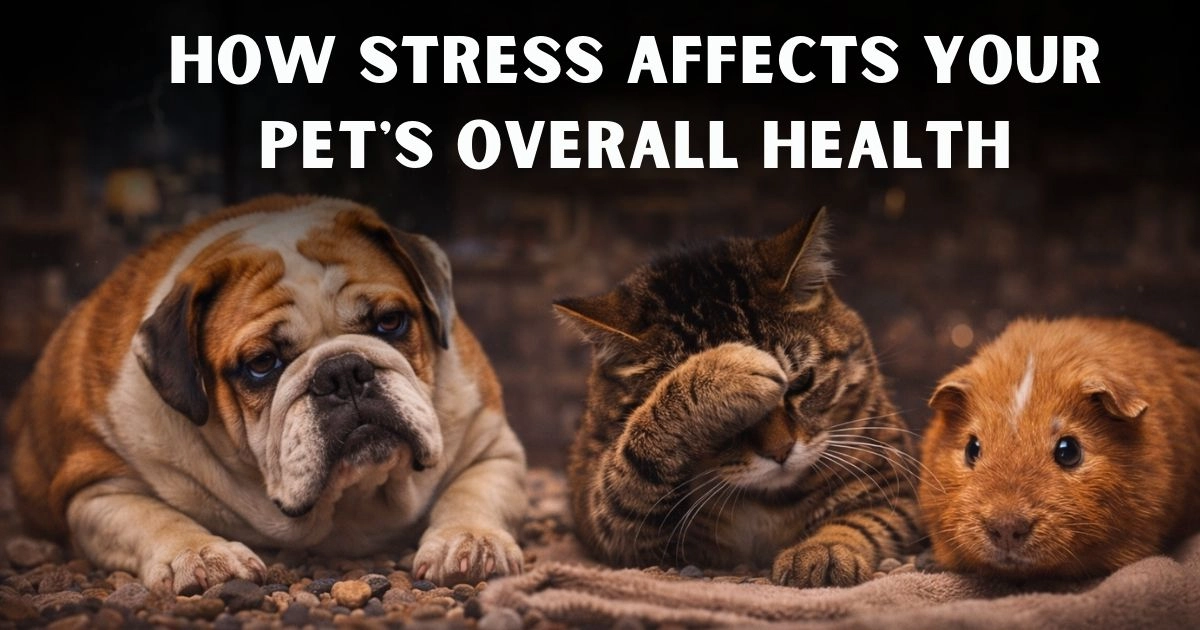
Stress is not just a human problem. Pets also experience stress, and when it lasts too long, it can seriously affect their overall health and well-being. Dogs, cats, birds, and small animals may feel stressed due to changes in routine, loud environments, lack of attention, illness, or even boredom. Because pets cannot clearly tell us how they feel, stress often goes unnoticed until it starts affecting their body.
Understanding how stress impacts pets helps owners take early action and protect their pet’s long-term health.
Common Ways Stress Affects your Pet’s Health
| Health Area | How Stress Affects It | Possible Outcome |
|---|---|---|
| Digestive system | Stress upsets stomach balance | Vomiting, diarrhea |
| Immune system | Weakens natural defenses | Frequent illness |
| Skin and coat | Triggers excessive grooming or itching | Hair loss, skin infections |
| Weight and appetite | Changes eating habits | Weight gain or loss |
| Behavior | Causes fear or withdrawal | Aggression, hiding |
| Sleep patterns | Disturbs rest | Fatigue, low energy |
One of the first systems affected by stress is the digestive system. Pets under stress may lose appetite or eat too much. Some develop vomiting, loose stools, or constipation. These problems can become long-term if stress continues.
Stress also weakens the immune system. A stressed pet may fall sick more often or take longer to recover from common infections. This is because the body stays in a constant “alert mode,” leaving less energy to fight disease.
Another visible effect of stress is on the skin and coat. Cats may over-groom, dogs may scratch excessively, and birds may pluck feathers. These behaviors are often mistaken for allergies but are frequently linked to emotional stress.
Stress can also change a pet’s behavior and personality. Friendly pets may become distant or hide more. Some pets become unusually aggressive or fearful. These are not signs of “bad behavior” but signals that the pet is struggling emotionally.
Sleep is another area that suffers. Pets need proper rest to stay healthy. Stress can cause restlessness, pacing, or frequent waking, which leads to low energy and poor mood during the day.
So, what causes stress in pets? Common triggers include changes in environment, lack of routine, loneliness, loud noise, overcrowded spaces, or unresolved health issues. Even small changes that seem normal to humans can feel overwhelming to pets.
Helping a stressed pet starts with stability and routine. Regular feeding times, quiet rest areas, daily interaction, and gentle play help pets feel secure. Giving pets a safe space where they can retreat when overwhelmed is equally important.
If stress signs last for a long time or begin affecting health, it is important to consult a veterinarian. Chronic stress can lead to serious medical problems if ignored.
By recognizing the link between stress and health, pet owners can create a calmer environment and support both the physical and emotional health of their pets. A calm pet is not just happier—it is healthier too.
FAQs About Stress and Pet Health
Can stress really make pets sick?
Yes, long-term stress can weaken immunity and lead to illness.
What are early signs of stress in pets?
Loss of appetite, hiding, excessive grooming, or behavior changes.
Do indoor pets experience stress?
Yes, indoor pets can feel stressed due to boredom or lack of stimulation.
Can stress affect a pet’s lifespan?
Chronic stress can reduce quality of life and overall health.
How long does it take for pets to recover from stress?
Mild stress improves quickly, but long-term stress needs time and care.
When should I seek professional help?
If stress symptoms last several days or worsen, consult a veterinarian.