
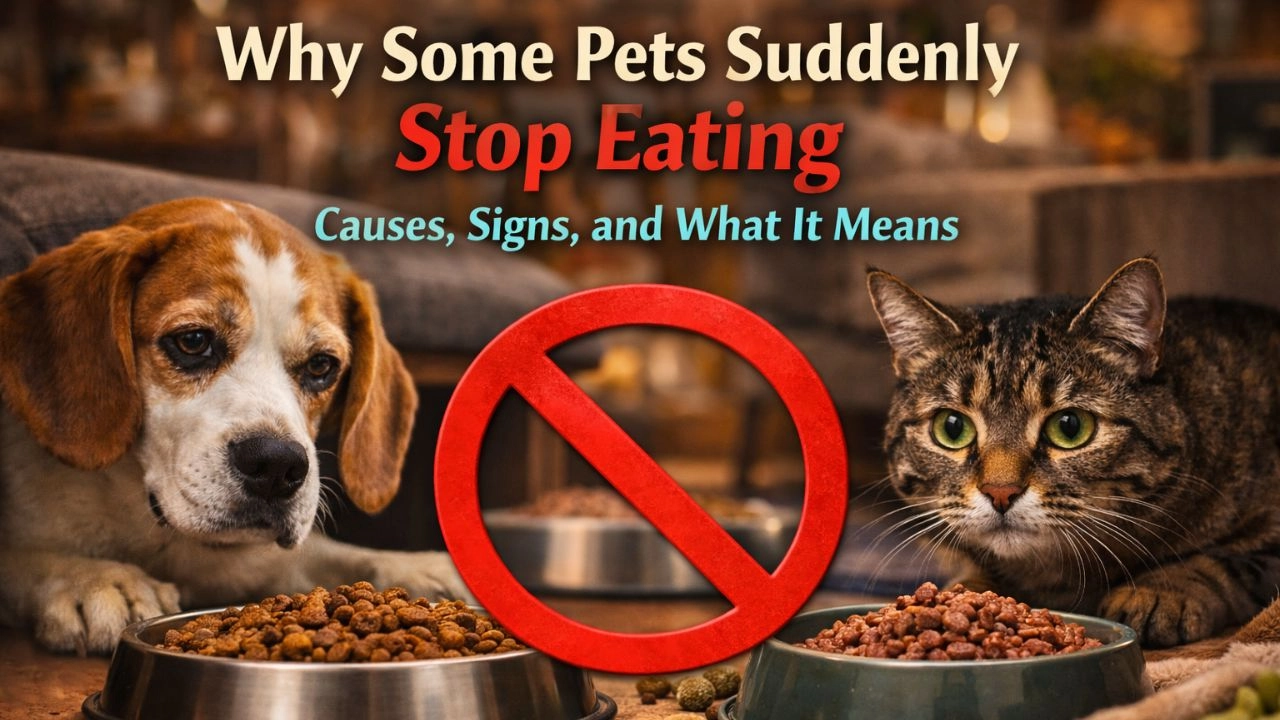
When a pet suddenly stops eating, it can worry any owner. Appetite changes are often the first visible sign that something is wrong. While skipping one meal may not always be serious, refusing food for longer can point to stress, illness, pain, or environmental changes. Dogs, cats, birds, and small pets can all show this behavior for different reasons, but the message is the same: your pet needs attention.
Pets are creatures of routine. A small change—new food, a different feeding time, a moved bowl, or a noisy environment—can reduce appetite. Emotional factors like stress or anxiety can also play a big role. Understanding the common causes helps you respond quickly and protect your pet’s health and comfort.
Common Reasons Pets Stop Eating and What They Mean
| Possible Cause | What It Means for Your Pet | What You Can Do |
|---|---|---|
| Stress or anxiety | Overwhelm from noise or changes | Create a calm feeding space |
| Change in food | Dislike of taste or texture | Transition slowly to new food |
| Dental pain | Chewing hurts | Check teeth and gums |
| Stomach upset | Nausea or discomfort | Offer plain, vet-approved food |
| Illness | Underlying health issue | Consult a veterinarian |
| Aging | Slower metabolism or senses | Adjust diet and portions |
One of the most common reasons pets stop eating is stress. Moving homes, new pets, schedule changes, or loud environments can suppress appetite. Even sensitive smells or a relocated food bowl can make some pets uncomfortable.
Dental problems are another frequent cause, especially in older pets. Sore gums, broken teeth, or infections can make eating painful. Pets may approach food but walk away, which is a strong sign of mouth discomfort.
Digestive issues also affect appetite. Vomiting, diarrhea, or gas can reduce a pet’s desire to eat. Rich treats, sudden diet changes, or spoiled food often trigger stomach upset.
Sometimes the cause is more serious. Infections, fever, organ issues, or parasites can all lead to appetite loss. If your pet skips meals for more than 24 hours (or sooner for small pets), it’s important to seek professional advice.
So what should you do? Start by observing your pet closely. Note any behavior changes, lethargy, weight loss, or unusual signs. Keep feeding times consistent and offer meals in a quiet, familiar place. Avoid forcing food, as this can increase stress.
If appetite does not return quickly or your pet shows other symptoms, a veterinarian visit is the safest step. Early care can prevent small problems from becoming serious.
Understanding why pets stop eating helps owners act with calm and confidence. With patience and timely care, most pets regain their appetite and return to their happy, healthy routine.
FAQs About Pets Suddenly Stopping Eating
Is it normal for pets to skip a meal sometimes?
Yes, skipping one meal can happen, but ongoing refusal is not normal.
How long can pets go without eating?
It depends on the pet, but more than 24 hours is a concern for most animals.
Can stress alone cause appetite loss?
Yes, stress and anxiety are common causes, especially after changes.
Should I switch food if my pet won’t eat?
Only after checking for other causes and making changes gradually.
When should I see a veterinarian?
If appetite loss lasts more than a day or comes with other symptoms.
Can aging affect appetite?
Yes, older pets may need diet adjustments due to changing needs.