
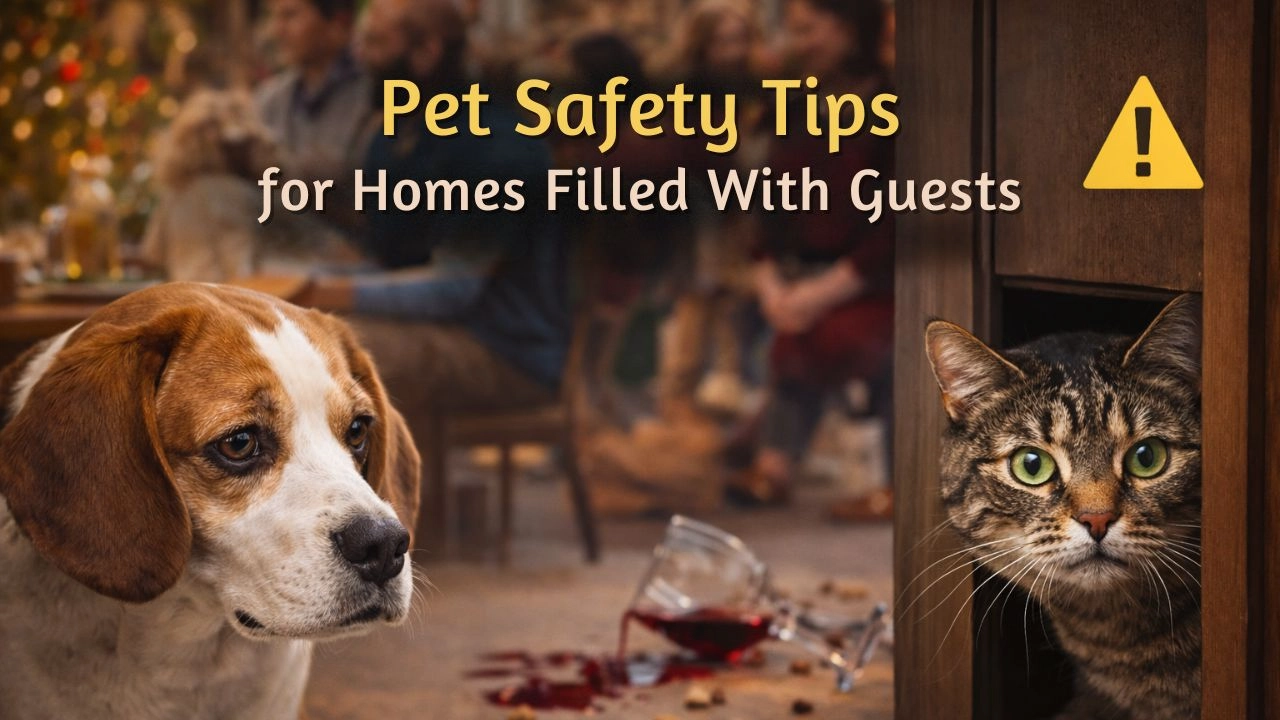
When your home is full of guests, laughter, and activity, it can feel exciting for people but overwhelming for pets. New faces, loud voices, open doors, and changes in routine can create stress and safety risks for pets. Dogs, cats, birds, and small animals all react differently, but most pets need extra care and attention when the house is busy.
Pets rely on familiar surroundings and routines to feel safe. When guests visit, pets may feel confused or scared because their environment suddenly changes. Some pets become shy and hide, while others may act restless or protective. Understanding these reactions helps you keep your pet calm, secure, and protected during social gatherings.
Pet Safety Tips – Common Guest-Related Risks for Pets and How to Prevent Them
| Potential Risk | Why It Can Be Dangerous | What You Can Do |
|---|---|---|
| Open doors and gates | Pets may escape or get lost | Keep doors closed and remind guests |
| Too much handling | Pets may feel scared or threatened | Ask guests to respect pet boundaries |
| Dropped food | Unsafe foods can be eaten | Clean spills immediately |
| Loud noise | Noise can cause anxiety | Create a quiet safe space |
| Unfamiliar smells | Strong perfumes can stress pets | Keep pets away from crowded areas |
| Children playing roughly | Pets may react defensively | Supervise child–pet interactions |
One of the most important safety steps is setting up a safe retreat area for your pet. This can be a quiet room with their bed, toys, food, and water. When things get noisy, pets should be free to rest without being disturbed. Let guests know that this space is off-limits.
Another key tip is to communicate with guests. Many visitors love pets and may unknowingly cross boundaries. Politely explain how your pet prefers to be approached or if they should not be touched at all. This prevents fear-based reactions and keeps everyone safe.
Food safety is also critical during gatherings. Guests may drop snacks or offer treats without knowing the risks. Many human foods are unsafe for pets, so it is best to ask guests not to feed animals. Keeping pets on their regular diet helps avoid stomach problems and stress.
Noise control matters more than people realize. Loud talking, music, or celebrations can overwhelm sensitive pets. Turning down music and limiting sudden noise can greatly improve your pet’s comfort. Calm environments help pets relax faster.
Finally, try to keep your pet’s daily routine as normal as possible. Feeding, walking, and playtime should stay close to regular times. Routine gives pets a sense of stability, even when the house feels busy.
With simple planning and awareness, you can enjoy time with guests while keeping your pet safe, calm, and happy. Small actions make a big difference in protecting your pet’s well-being.
FAQs
Why do pets get anxious around guests?
New people, noise, and smells can make pets feel overstimulated and insecure.
Should I keep my pet locked away during gatherings?
Not always, but giving pets access to a quiet space is important if they feel stressed.
Can guests accidentally cause harm to pets?
Yes, unintentional actions like feeding unsafe food or leaving doors open can be risky.
How can I protect pets from escaping when guests arrive?
Use baby gates, closed doors, or leashes during entry times.
Is it okay to let children play with pets?
Yes, but only with adult supervision and gentle handling.
What is the best way to calm pets during visits?
Maintain routine, offer quiet breaks, and keep interactions short and calm.