
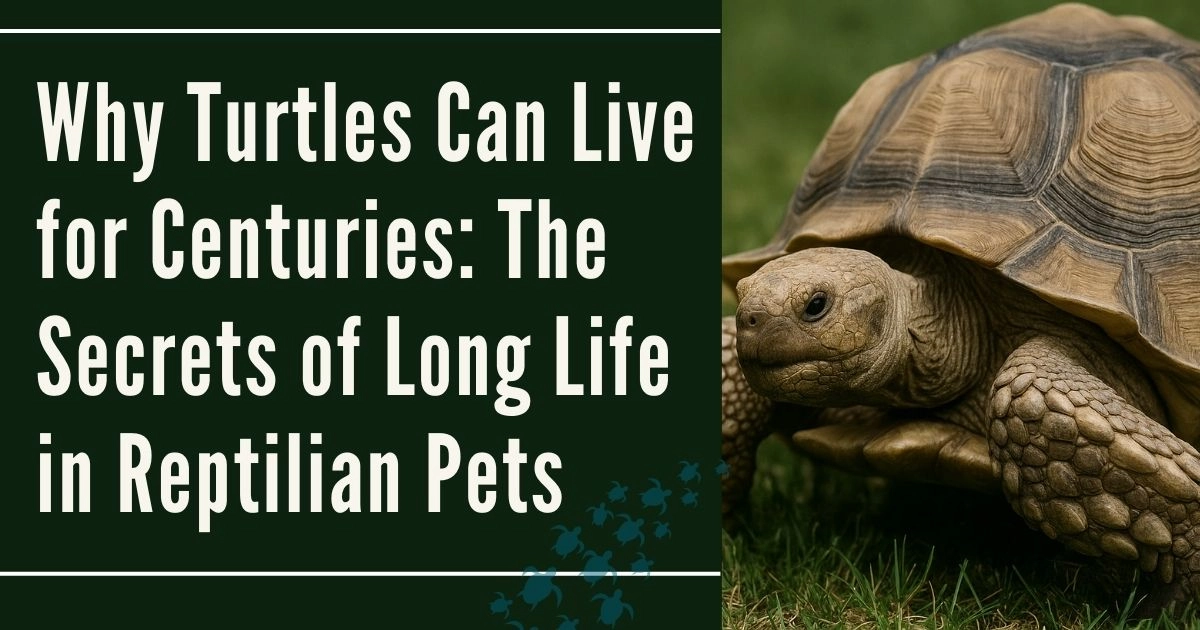
Turtles are among the longest-living animals on Earth, with some species surviving well over 100 years and a few even approaching two centuries of life. This extraordinary lifespan often surprises pet owners, especially when compared to mammals like dogs or cats. The secret behind turtle longevity is not magic, but a fascinating combination of slow metabolism, cellular protection, stress resistance, and evolutionary design. Understanding how turtles live so long gives us insight into both reptile biology and the science of aging itself.
Factors Behind Turtle Longevity
| Longevity Factor | How It Works in Turtles | Why It Extends Life |
|---|---|---|
| Slow Metabolism | Energy is used very gradually | Reduces cellular damage over time |
| Low Heart Rate | Fewer heartbeats per minute | Slows overall body wear |
| Strong DNA Repair | Cells repair damage efficiently | Prevents early aging |
| Stress Resistance | Calm nervous system response | Protects organs and immune system |
| Protective Shell | Natural physical defense | Reduces injury and predation |
The Power of a Slow Metabolism
One of the most important reasons turtles live so long is their extremely slow metabolism. Unlike mammals, turtles burn energy at a much slower rate. This means their cells experience less oxidative stress, which is one of the main causes of aging. Fewer chemical reactions inside the body result in less cellular wear and tear, allowing tissues and organs to remain functional for decades longer than those of fast-metabolism animals.
Their slow metabolism also allows turtles to survive long periods without food. Some species can go weeks or even months with minimal intake, reducing strain on their digestive system and internal organs.
How Turtles Resist Aging at the Cellular Level

Recent scientific studies suggest turtles have exceptionally strong DNA repair mechanisms. When cells are damaged due to environmental stress or normal aging, turtles can repair that damage more efficiently than many other animals. This helps prevent mutations that lead to disease and organ failure.
Turtles also show remarkable resistance to age-related illnesses. Unlike humans, they rarely suffer from cancer or degenerative diseases. Their immune systems remain stable for most of their lives, allowing them to fight infections effectively even at an advanced age.
The Role of Stress and Behavior
Stress plays a major role in aging, and turtles experience very low stress levels compared to mammals. Their nervous systems are designed for calm, deliberate movement rather than constant alertness. This reduces the release of stress hormones, which in other animals can damage the heart, immune system and brain over time.
Turtles also live highly predictable and energy-efficient lives. They do not chase prey aggressively or engage in intense physical activity unless necessary. This conservative lifestyle helps preserve their bodies for the long term.
The Protective Advantage of the Shell
A turtle’s shell is more than just armor; it is a key contributor to longevity. The shell reduces the risk of injury and predation, meaning turtles are far less likely to suffer life-threatening wounds. Fewer injuries allow the body to focus its energy on maintenance and repair rather than recovery.
Because turtles are so well protected, evolution favored long life rather than rapid reproduction. This slow, steady life strategy proved incredibly successful.
What This Means for Pet Turtles
Pet turtles can live several decades or more when properly cared for. Correct diet, clean habitat, appropriate lighting and minimal stress are essential. While not all pet turtles will live for centuries, their natural biology gives them the potential for exceptionally long lives compared to most pets.
FAQs
Q1. Can pet turtles really live over 100 years?
Yes. Some species, especially tortoises, can live well over a century with proper care.
Q2. Why do turtles age slower than mammals?
Their slow metabolism, strong DNA repair systems, and low stress levels significantly slow the aging process.
Q3. Do turtles ever die of old age?
Often they do not. Many turtles die from environmental factors or accidents rather than natural aging.
Q4. Is turtle longevity linked to their shell?
Yes. The shell provides protection that reduces injury and stress, contributing to longer life.
Q5. How can owners help pet turtles live longer?
Providing a balanced diet, proper UVB lighting, clean habitat and low-stress environment supports their natural longevity.