
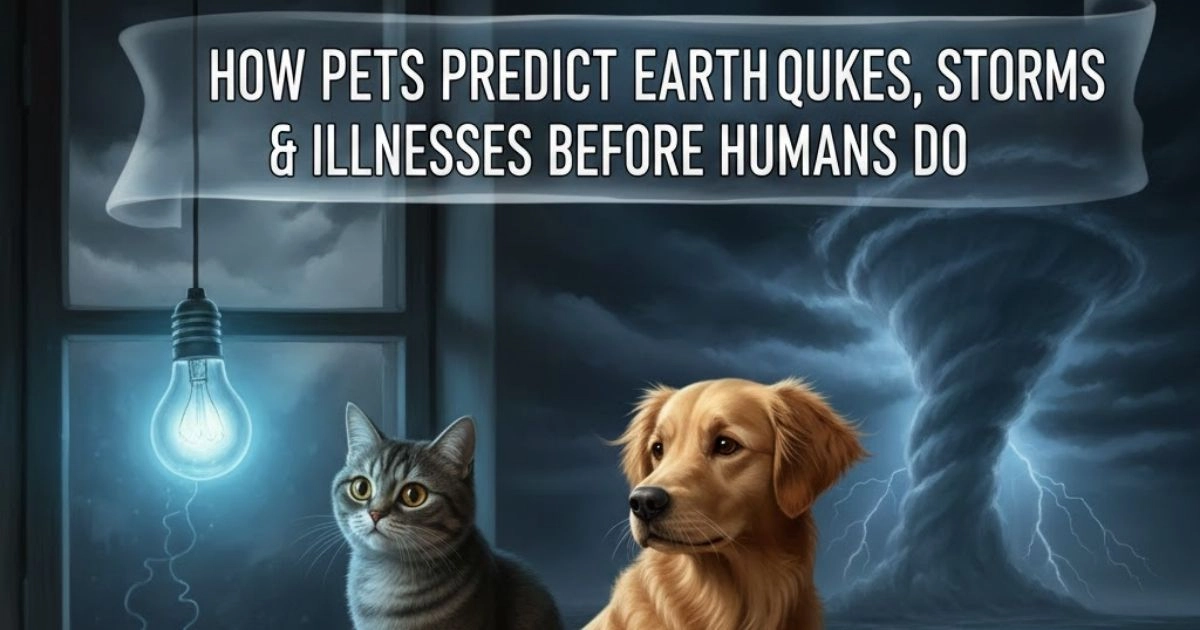
Pets often surprise their owners with sudden changes in behavior before major events. A dog may become restless moments before a storm. A cat might hide hours before an earthquake strikes. Some pets even cling to their owners when they sense an illness developing. These reactions are not coincidences. They are signals of a powerful natural ability that pets possess: the ability to detect danger and disease long before humans notice any signs. Understanding how pets sense these changes reveals just how remarkable their instincts truly are.
Pets have stronger senses than humans, especially when it comes to sound, smell and environmental vibrations. These senses allow them to pick up subtle cues that humans cannot detect. Dogs can hear low-frequency rumbling in the ground before earthquakes. Cats can sense shifts in air pressure that signal an approaching storm. Many pets can detect chemical changes in the human body, alerting them to illnesses or emotional distress. Their bodies serve as natural warning systems, helping them protect themselves and their families.
How Pets Sense Natural and Physical Changes
| Event Type | How Pets Detect It | Typical Pet Behavior |
|---|---|---|
| Earthquakes | Ground vibrations, sound frequencies | Hiding, restlessness, sudden escape attempts |
| Storms | Changes in air pressure, static electricity | Pacing, seeking shelter, clingy behavior |
| Human Illness | Chemical scent changes, hormone shifts | Staying close, alertness, unusual calmness |
| Emotional Stress | Changes in breathing, body language, pheromones | Comforting behavior, physical contact |
How Pets Sense Natural Disasters
Earthquakes are one of the most mysterious events that pets seem to detect early. Before the ground shakes, small tremors ripple beneath the earth’s surface. Humans cannot feel these micro-vibrations, but dogs, cats and even birds can. Their heightened sensitivity to movement and sound allows them to sense danger minutes or even hours before it happens. This is why some pets suddenly hide, bark excessively or try to escape right before an earthquake.
Storm prediction is another powerful skill. Pets can feel sudden drops in air pressure, temperature changes and static electricity in the atmosphere. A cat may retreat to high shelves or tight spaces when a storm approaches, while dogs may become restless, pace or whine. These behaviors show that pets are responding to environmental clues that humans often overlook.
How Pets Detect Human Illness
One of the most extraordinary abilities pets possess is their capacity to sense illness in humans. Dogs, in particular, have an exceptional sense of smell and can detect small changes in body chemistry. They can identify conditions such as low blood sugar, seizures, infections and even some cancers. Cats, although quieter about their reactions, often become protective or unusually affectionate when their owners are unwell.
Pets can also pick up emotional and psychological signals. When humans experience stress or anxiety, their breathing patterns and hormone levels change. Dogs and cats respond to these shifts through comforting behavior, staying close or refusing to leave their owners’ side. This emotional sensitivity is one reason pets make excellent therapy companions.
A Natural Warning System Built Over Centuries
Pets developed these abilities over thousands of years through evolution and their bond with humans. Their instincts helped them survive in the wild and now help them care for the people they live with. Whether warning about earthquakes, sensing changing weather or detecting illness, pets act as silent protectors. These abilities remind us that animals experience the world through senses far more advanced than our own.
Here are FAQs specifically written for your article “How Pets Predict Earthquakes, Storms & Illnesses Before Humans Do” — clear, natural, and helpful for readers.
FAQs
Q1. How do pets sense earthquakes before humans?
Pets can feel tiny ground vibrations and hear low-frequency sounds that occur before an earthquake. These signals are too subtle for humans to notice, but animals detect them instantly.
Q2. Why do dogs and cats act strangely before a storm?
Storms create sudden changes in air pressure, temperature and static electricity. Pets sense these shifts and react by pacing, hiding or becoming clingy.
Q3. Can pets really detect illness in humans?
Yes. Pets, especially dogs, can smell chemical and hormonal changes in the human body caused by illness. This allows them to sense infections, low blood sugar, seizures and sometimes even cancer.
Q4. Why does my pet stay close to me when I’m sick or stressed?
Pets pick up changes in your scent, breathing and body language. Their natural instinct is to offer comfort and stay near you when something feels wrong.
Q5. Do all pets have the same ability to sense danger?
No. While most pets have strong senses, dogs generally have the most advanced smell detection, and cats are extremely sensitive to vibrations and pressure changes.
Q6. Should I be worried if my pet suddenly hides or becomes restless?
Not always. While it can indicate environmental changes, pets also react to everyday noises, mood shifts or unfamiliar scents. Observe patterns before assuming a warning.