
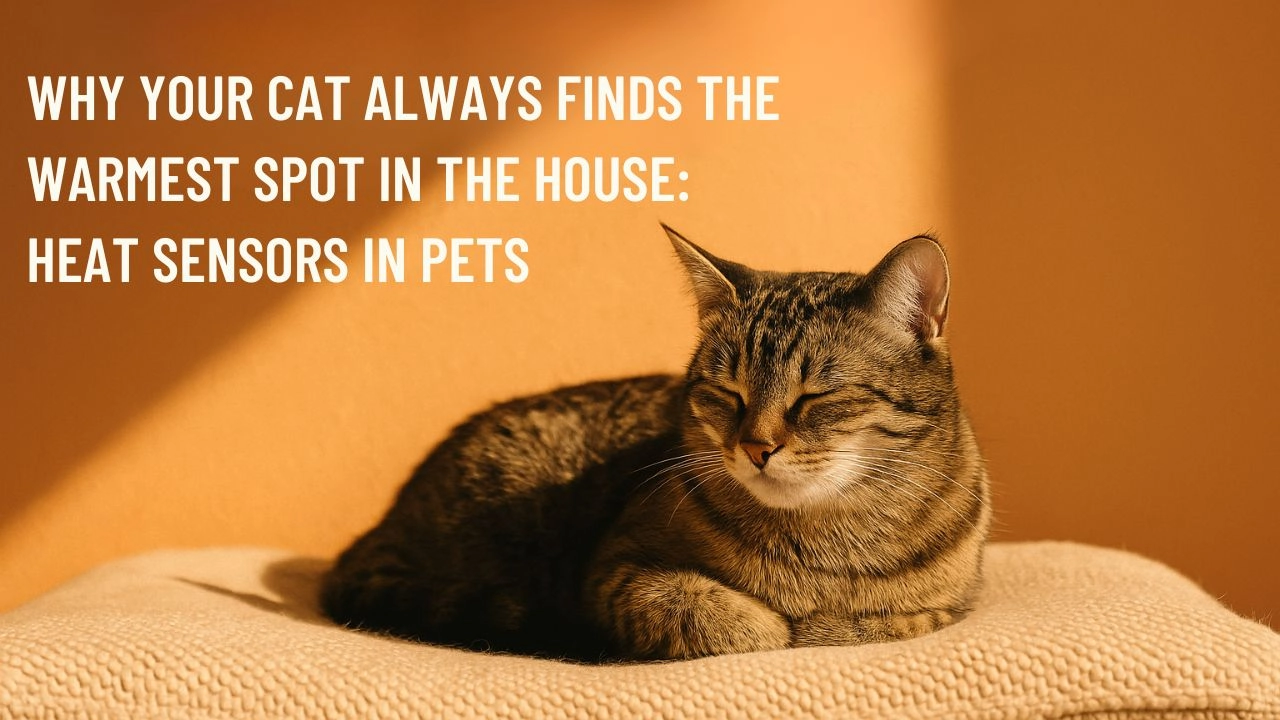
If you have ever noticed your cat curling up on a sunny windowsill, sitting on your laptop keyboard or settling on warm laundry, you have seen a natural instinct at work. Cats seem to always find the warmest spot in the house, like Their Way Home and this impressive ability is not accidental. It comes from their heat-sensing biology, desert ancestry and strong preference for conserving energy. Understanding how cats detect warmth reveals fascinating secrets about their sensory world.
Heat-Seeking Abilities in Pets
| Pet | Primary Heat-Detection Tool | Why They Seek Warmth |
|---|---|---|
| Cats | Thermoreceptors, whiskers, high body temperature | Conserve energy and maintain desert-adapted warmth |
| Dogs | Skin temperature sensors & coat thickness | Comfort and heat regulation |
| Small Pets (Rabbits, Guinea Pigs) | Thin skin & high sensitivity | Protection from cold stress |
Why Cats Are Naturally Drawn to Heat
Cats evolved from desert-dwelling ancestors, which shaped their biology to function best in warm conditions. Their body temperature is naturally higher than humans, usually between 100°F and 102.5°F (38°C–39°C). To maintain this temperature without wasting energy, cats instinctively seek warm places.
Cats possess highly sensitive thermoreceptors—nerve endings in their skin that respond quickly to temperature changes. These receptors help them detect warm surfaces before they even touch them, allowing cats to locate the most comfortable resting spots in a room.
How Cats Sense Warmth Through Whiskers and Skin
A cat’s whiskers do much more than help with balance. They can detect air movement and temperature shifts, helping cats find pockets of warm air rising from electronics, heaters or sunlight. Their nose also responds to temperature differences, giving them more clues about the warmest areas nearby.
Because cats spend 12–18 hours a day sleeping, maintaining warmth is essential. Warm spots support deeper sleep, help them conserve calories and keep their bodies comfortable.
Why Warm Places Feel Safe to Cats
Warmth is not only physically comforting—it is emotionally soothing. Cats associate warmth with safety and relaxation. In the wild, warm sheltered areas helped protect them from predators and harsh environments. Modern indoor cats mimic this instinct by choosing cozy places such as:
– Sun patches
– Laptops or electronics
– Freshly dried laundry
– Warm blankets
– Human laps
These warm zones feel secure, calm and familiar.
Not Just Cats—Other Pets Love Heat Too
While cats are the experts of heat detection, dogs and small pets also enjoy warm areas. Short-haired dogs seek sunlit spots for comfort, and small pets with thin skin depend on warmth for survival. However, cats remain the most advanced heat-seekers due to their evolutionary background and unique sensory systems.
FAQs
Q1. Why does my cat sit on my laptop or phone?
Because electronics release small amounts of radiant heat, which cats detect instantly through their thermoreceptors and whiskers.
Q2. Is it safe for cats to sleep near heaters?
Cats love warmth, but they may not sense overheating quickly. It’s best to keep heaters at a safe distance or use pet-safe heating pads.
Q3. Why does my cat always take my warm seat the moment I stand up?
Cats detect leftover body heat on chairs or couches and quickly claim it as the warmest spot available.
Q4. Do cats feel cold easily?
Yes. Their bodies are designed for warm climates, so they seek heat to stay comfortable and conserve energy.
Q5. Why do cats follow sunlight across the room?
Sunlight provides a natural heat source, and cats instinctively track it to maintain an ideal body temperature.