
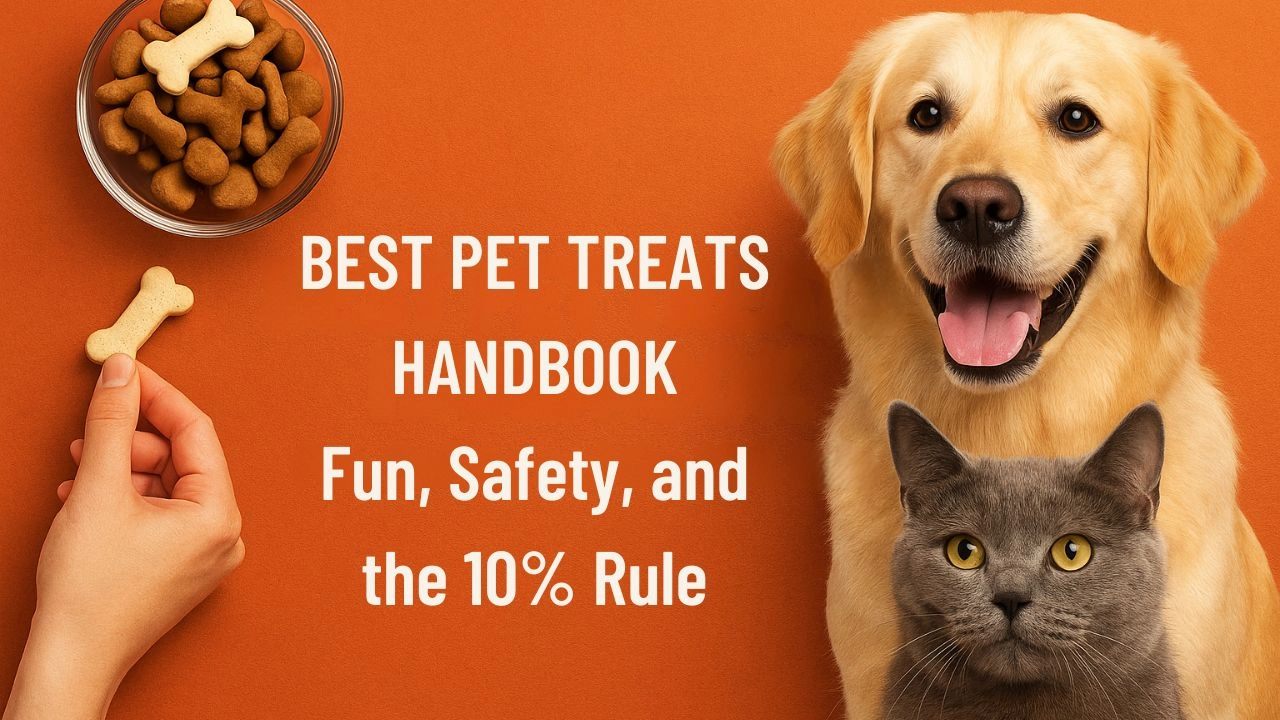
1. Treats Are More Than Just Snacks
In the world of pet care, treats are not just for fun anymore. They are powerful, strategic tools that help pets learn, stay calm, and feel loved. Giving a treat is one of the best ways to build a strong, trusting friendship between you and your pet.
1.1 Treats Help with Training and Learning
When you give a treat immediately after your dog or cat does something good—like sitting when asked or staying quiet—you are using Positive Reinforcement. This is the fastest way pets learn!
- Not All Treats Are Equal: Some treats are low-value (like a piece of kibble) and are perfect for easy training in a quiet house. Other treats are high-value (like cheese or a tiny piece of meat) and are needed for hard jobs, like paying attention when there is a noisy delivery truck outside.
- Be Careful with High-Value: Foods like cheese are very high in calories (energy). Just one small ounce of cheese can use up a small dog’s entire daily treat budget! So, high-value treats must be used in very, very tiny pieces.
1.2 Treats Are Great for Brain Games
Hiding treats inside puzzle toys or slow feeders is called enrichment. This makes your pet use their brain to solve a problem, which is very tiring and fun for them, just like solving a difficult puzzle is for you!
- Fight Boredom: This kind of mental stimulation is great for pets that get bored easily, helping them feel less anxious and preventing bad habits like chewing furniture.
- How to Layer a Puzzle: To make a puzzle toy last longer, start by putting easy treats inside, then pack it with harder food like compressed kibble. Finish by plugging the top with a soft, yummy paste like peanut butter to keep them busy.
1.3 Treats Help Pets Feel Safe at the Vet
Visiting the vet or the groomer can be very stressful for pets. You can use treats to change their mind about these scary places.
- Happy Visits: Take your pet to the vet just for a “happy visit.” You go in, they get a handful of high-value treats from the staff, and then you leave right away, with no pokes or prods. This teaches your pet that the vet’s office is a place where good things happen!
- Handling Practice: At home, give your pet a treat every time you gently touch their paws, ears, or mouth. This gets them ready for check-ups and nail trims without feeling scared.
2. The Golden Rule: The 10% Limit
Treats should never be the main part of your pet’s diet. To keep your pet healthy, you must follow the 90/10 Rule.
2.1 What is the 90/10 Rule?
This rule says that 90% of your pet’s daily calories (food energy) must come from their complete and balanced pet food. The remaining 10% of calories can come from treats and snacks.
- Why is this rule so important?
- Stops Obesity: It is the best way to fight obesity (being overweight), which is a huge problem for pets.
- Keeps Food Balanced: If treats make up more than 10% of the food, your pet misses out on the vitamins and minerals that only their balanced pet food provides. This is called nutrient dilution.
2.2 Tracking the Calories
To follow the 10% Rule, you need to know how many calories your pet needs each day (Daily Caloric Intake). Ask your veterinarian for this exact number.
For example, a medium dog needs about 800 calories a day. 10% of 800 is 80 calories. That means 80 calories is the absolute limit for treats every single day.
| Dog Weight Class | Approximate Daily Caloric Needs | Maximum Daily Treat Allowance (10%) | Health Risks if Exceeded |
| Small (10 lbs) | 300 – 350 kcal | 30 – 35 kcal | Nutrient imbalance, Weight gain |
| Medium (30 lbs) | 700 – 900 kcal | 70 – 90 kcal | Obesity, digestive upset |
| Large (75 lbs) | 1400 – 1800 kcal | 140 – 180 kcal | Increased risk of joint problems |
2.3 Danger: High-Fat Treats and Pancreatitis
Giving your pet too many rich, high-fat foods (like turkey skin, bacon, or creamy sauces) can be very dangerous. It can cause a severe, life-threatening tummy sickness called acute pancreatitis. This is a painful swelling of an organ called the pancreas and requires an emergency trip to the vet. Moderation is critical.
3. Functional Treats: Healthy Boosts
Many new Pet Treats today are called Functional Treats because they contain special ingredients to help with specific health issues.
- Targeted Wellness: These treats often focus on two big problems: Joint Support (for older dogs with stiff legs) and Calming Support (for pets with anxiety or fear).
- Calming Ingredients: Treats designed to help pets relax often use ingredients like probiotics (to help the gut-brain connection), chamomile, or tryptophan to promote calm behavior.
- Easy Dosing: Functional treats are usually made as soft chews or oils. Soft chews are precisely dosed (the dose is exactly measured), making it simple to give the right amount every day.
4. The Dental Expert Seal (VOHC)
Dental disease (bad teeth and gums) is one of the most common health problems in pets. While daily brushing is the best defense, Dental Treats can help.
4.1 Look for the VOHC Seal
Because many dental products do not actually work, an independent group of experts called the Veterinary Oral Health Council (VOHC) checks them.
- What it Means: If a treat has the VOHC Seal of Acceptance, it means the manufacturer proved with two scientific tests that the product removes at least 20% of plaque or tartar.
- The Difference: Treats with the VOHC Seal are scientifically proven to work. Treats without the seal may not work at all.
- How They Work: Effective dental chews have a special shape and texture that creates mechanical abrasion (scraping) to scrub the surface of the teeth as the pet chews, which helps reduce bacteria and bad breath.
5. Low-Calorie Heroes: Treats You Can Give More Often
Since the 10% calorie limit is very strict, you need treats that are big in volume but tiny in calories. These are great for long training sessions!
5.1 Safe Human Foods are the Best Low-Calorie Options
Many raw, plain vegetables are excellent for training because they give you the most “bang for your buck” (lots of rewards for very few calories).
| Treat/Food | Approximate Calorie Count | Key Benefit | Safety Notes |
| Celery | 6 kcal (8-inch stalk) | Highest volume, lowest density | Guilt-free and crunchy reward |
| Green Beans (plain, frozen) | 33 kcal (1 cup) | Great for dieting and high volume | Use plain—no salt, butter, or oil |
| Baby Carrots (fresh) | 5 kcal (1 large carrot) | Satisfying crunch and source of vitamins | Chop them small for little dogs to prevent choking |
| Blueberries | 85 kcal (1 cup) | Contains antioxidants | Use only a small handful due to natural sugar |
5.2 The Calorie Trap
It’s easy to go over the 10% limit if you use high-calorie foods. For example:
- A 100-calorie allowance can buy you 50 to 100 low-calorie mini-treats for training.
- That same 100 calories is only 1 ounce of plain cheddar cheese or just 2.5 bacon-strip dog treats.
Choosing low-calorie alternatives helps you keep rewarding your pet without making them gain weight.
6. Emergency Warnings: Deadly Dangers
Some human foods are POISON to pets. You must keep them strictly out of reach.
6.1 The Deadly Sweetener: Xylitol (Birch Sugar)
Xylitol is an artificial sweetener found in many sugar-free products like gum, candy, certain peanut butters, and mouthwash.
- What it does: For dogs, Xylitol is extremely poisonous. It causes a rapid, massive release of insulin, which makes the dog’s blood sugar drop dangerously low (hypoglycemia) in minutes.
- Signs: Vomiting, weakness, staggering, seizures, and potential liver failure.
- Action: If your dog eats anything with Xylitol, call your vet or Animal Poison Control immediately.
6.2 The Hidden Fruit Danger: Grapes and Raisins
Grapes, raisins, and tamarind can cause acute kidney failure in dogs.
- No Safe Amount: Since the toxic dose is different for every dog, any ingestion should be treated as dangerous and requires immediate veterinary help.
- Signs: Vomiting and diarrhea quickly, followed by signs of kidney trouble (not peeing or peeing too much) within 72 hours.
6.3 Physical Hazards: Bones
It is a myth that dogs need to chew real bones. Veterinary experts strongly advise against giving pets bones (cooked or raw) because they pose severe dangers.
- Teeth Damage: Bones are hard and can easily cause fractured teeth, which is very painful and expensive to fix.
- Internal Injury: Sharp bone fragments can pierce the tongue or the walls of the stomach and intestines, leading to a fatal infection called peritonitis.
- Choking/Blockage: Bones can get stuck in the throat, jaw, or digestive tract, requiring emergency surgery.
- Safe Alternative: Use VOHC-approved dental chews or hard rubber chew toys instead.
The Pet Treats Strategy
The smart way to use Pet Treats is to see them as a powerful, measured tool for your pet’s wellness.
- Stick to the 90/10 Rule: Always track all rewards to ensure they never exceed 10% of the daily calories. This is the best defense against obesity and nutrient imbalance.
- Use Low-Calorie Rewards: For frequent training, use low-calorie vegetables like celery and green beans.
- Prioritize Safety: Never give pets Xylitol, grapes, raisins, or bones.
- Check the Seal: For oral health, always look for the VOHC Seal to guarantee the dental chew is scientifically proven to work.
By following these rules, you ensure that every treat you give contributes to a happy, healthy, and long life for your pet.