
Why Dog Toys Are More Important Than Ever
Dog toys today are more than simple play items. For years, people believed dogs only needed to run, fetch, or chew something to stay healthy. But new research shows something very different: dogs need mental exercise just as much as physical exercise. A dog’s brain must stay active, challenged, and engaged to keep them happy, confident, and well-behaved. Toys are just as helpful as positive training in helping your dog learn faster.
This is why choosing toys is not a small decision. Good toys help dogs think, solve problems, relax during stressful moments, and release extra energy in safe ways. Modern toys are designed to support a dog’s natural needs — like sniffing, chewing, foraging, licking, and exploring. When these needs are met, dogs behave better, feel calmer, and enjoy a higher quality of life.
Good toys are no longer just “something fun.” They are an important part of your dog’s health. Picking the right toys is like making a long-term investment in your pet’s behavior, happiness, and safety.
How Toys Help Your Dog’s Brain and Emotions
Modern pet toys play a huge role in how dogs think, feel, and behave every day. They reduce stress, improve confidence, and help dogs stay mentally sharp as they grow older.
A. Toys Reduce Stress and Improve Behavior
Mental play is powerful. It helps dogs stay busy in a positive way and keeps their minds tired — not just their bodies. Dogs who stay under-stimulated often show unwanted behaviors like barking, chewing, jumping, or digging. These aren’t “bad” dogs; they’re simply bored.
Puzzle toys, snuffle mats, and food-dispensing toys help dogs:
- stay busy during alone time
- manage separation anxiety
- feel calmer in new places
- avoid destructive behaviors
- build confidence
When dogs are able to focus on a task, especially one they enjoy, their mind relaxes. Toys give them healthy ways to release stress and learn to self-soothe when they feel worried or overstimulated.
B. Why Mental Play Makes Dogs Happier
When a dog solves a puzzle or finds a treat hidden inside a toy, their brain releases dopamine, the same “feel-good” chemical humans produce when we accomplish something. This helps dogs feel proud and more interested in learning.
Mental play also helps senior dogs stay sharp. Just like puzzles help older people keep their minds active, dog puzzles support aging dogs by slowing down memory loss and keeping them alert.
Calming activities like sniffing, licking, or foraging help reduce a dog’s heart rate and make them feel peaceful. For anxious dogs or dogs that get over-excited easily, low-energy activities like snuffle mats are much better than high-speed games like running or intense tugging.
Modern Toy Types and What They Do
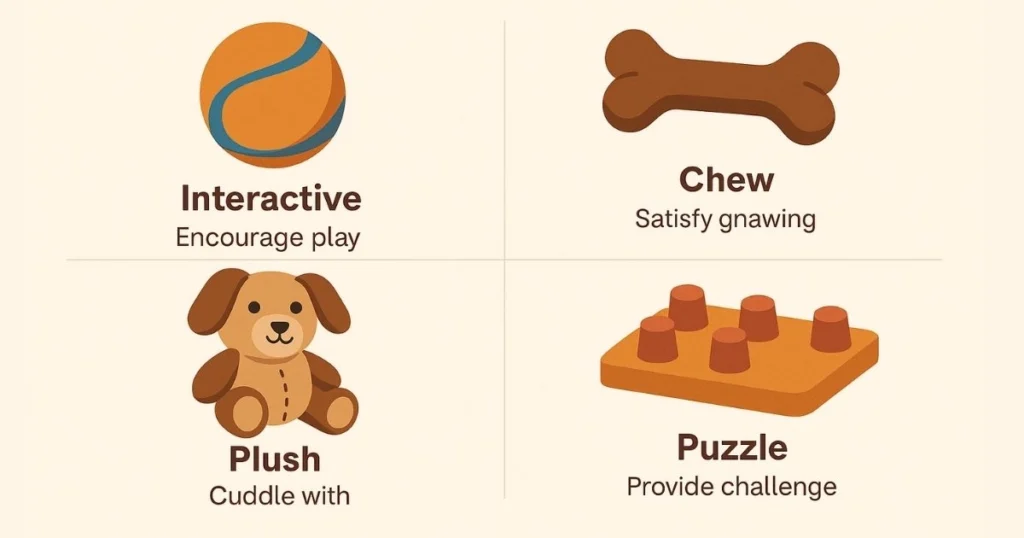
There are many kinds of toys, and each type supports your dog in a different way. Understanding them helps you choose the right mix for your dog’s needs.
A. Toys That Challenge the Brain
These toys make dogs think and work for their food, which makes mealtime fun and encourages slow eating.
Examples include:
- puzzle feeders
- snuffle mats
- lick mats
- treat-dispensing balls
- food-stuffable toys like KONG, Toppl, and Qwizl
These toys support natural instincts like sniffing, hunting, and foraging. They are excellent for anxious or high-energy dogs who benefit from slow, calming activities.
B. Toys for Chewing and Dental Health
Chew toys help keep your dog’s teeth clean, give them a safe outlet for chewing needs, and prevent chewing on furniture or shoes.
Chewers fall into three groups:
- Gentle chewers → soft toys
- Moderate chewers → firm rubber
- Heavy chewers → tough rubber or reinforced nylon
Strong chew toys also support gum health and reduce tartar buildup.
C. Toys for Active Play
These toys keep dogs physically active, strengthen the bond between you and your pet, and help burn extra energy.
Active toys include:
- fetch toys
- frisbees
- tug toys
- floating toys
Tug toys should always be used with supervision to avoid breakage or injury.
Safety First: How to Choose Safe Dog Toys
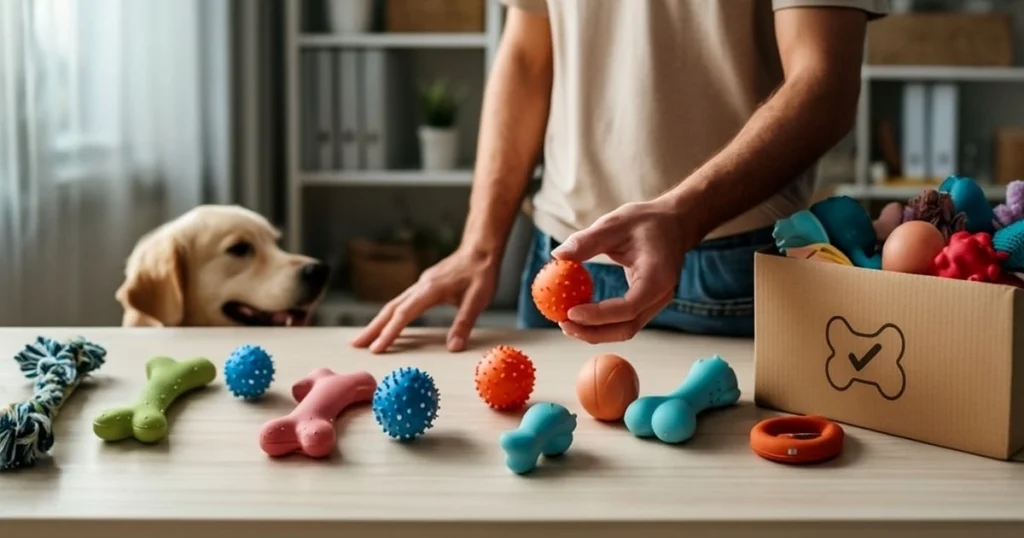
Dog toy safety is just as important as what the toy does. Poor-quality toys can cause choking, stomach problems, or injuries.
A. Choose Toys Made from Safe Materials
The safest materials include:
- natural rubber
- organic cotton
- recycled rubber
- bamboo or natural wood
These materials don’t contain harmful chemicals and are safer for dogs who chew a lot.
B. Hazards You Should Always Avoid
Some toy designs are unsafe, especially for dogs who shred or chew aggressively.
Avoid toys with:
- small pieces
- loose feathers
- plastic eyes
- thin rubber
- stuffing that can be swallowed
- string, tinsel, or yarn
Broken toys can cause choking or stomach blockages. A toy should be replaced as soon as it breaks, tears, or becomes sharp.
C. Why Laser Toys Are Not Good for Dogs
Laser pointers may look fun, but dogs can never “catch” the light. This makes them frustrated and can cause:
- stress
- obsessive behavior
- shadow chasing
- constant anxiety
Dogs need real objects they can touch, grab, bite, and feel. That’s why laser toys are not recommended by behavior experts.
Keeping Toys Clean, Fresh, and Fun
Buying toys is only the first step. Toys must be managed well to stay safe and effective.
A. Rotate Toys for More Fun
Just like people, dogs get bored seeing the same toys every day. Rotating toys keeps them exciting and fresh. A simple schedule is:
- keep some toys out
- store others away
- switch them every 2–3 days
This keeps the dog curious and mentally engaged.
B. Keep Toys Clean
Toys touch the ground, go into your dog’s mouth, and get covered in drool. They need regular cleaning to remove germs and dirt.
Soft toys:
- machine wash
- use pet-safe soap
- air dry
Rubber and nylon toys:
- soak in warm water + vinegar
- scrub, rinse, and air dry
Rope toys:
- wash in hot water
- dry completely
Avoid bleach or harsh cleaners.
C. When to Replace Toys
You should replace toys when they show:
- cracks
- splits
- sharp edges
- missing pieces
- holes
- stuffing coming out
Even small damage can cause big health problems.
| Toy Category | Main Benefit | Best For | Durability | Cleaning |
|---|---|---|---|---|
| Puzzle Feeders | Brain work, slow eating | bored dogs, fast eaters | Rubber/nylon: 4/5 | Soap or dishwasher |
| Snuffle Mats | Nose work, calming | anxious dogs | 2/5 | Machine wash |
| Heavy Chew Toys | chewing, dental health | power chewers | 5/5 | Vinegar + water |
| Lick & Stuffable | calming, crate time | anxious dogs | 4/5 | Hand wash |
| Rope/Tug Toys | exercise & bonding | active play | 2/5 | Machine wash |
Frequently Asked Questions (FAQs)
1. How do I choose the right toy for my dog?
Understand if your dog is a gentle, moderate, or heavy chewer. Choose toys based on their chewing power.
2. Is toy stuffing dangerous?
Yes. Stuffing can block the stomach if swallowed. Use stuffing-free toys for shredders.
3. Why are sniffing toys calming?
Sniffing lowers a dog’s heart rate and releases calming chemicals in the brain.
4. How often should I clean dog toys?
2–3 times per week using pet-safe cleaning solutions.
5. Are eco-friendly toys safer?
Yes. They contain fewer chemicals and are safer for dogs who chew a lot.
6. Why shouldn’t dogs play with laser pointers?
Dogs never “catch” the light, which frustrates them and can cause obsessive behavior.